Unit One EDU605_30_Differentiated Instruction2023_24_TERM1
By Andrew Parrella
Post University
Instructor Dr. Martha Bless
Mind Map Creation.
By Andrew Parrella
Post University EDU_605
Instructor Dr. Martha Bless
The Mind Map reflects all the interactions of childhood up to adulthood. This was interesting in design because as I added branches, it became apparent the all the branches seemed to need more branches! I had to keep them limited to about one extra branch for each main theme to control the many “differences” or “subsets” of information that could be related to each subject. This included everything from childhood, location, nationality, school, work, family, parents, animals, food, religion, finance, entertainment, tv, movies, music, casinos, reading, hospitals, banking, retail, media, school, technologies, children, adults, rural, cities, music, change, nutrition, medicine, healthiness, unhealthiness, travel, transportation, careers.
Since these are but a few of many more that could be created, it is important to note that in defining differentiated instructions to a colleague for understanding is first noted that, “What we share in common makes us human. How we differ makes us individuals. In a classroom with little or no differentiated instruction, only student similarities seem to take center stage. In a differentiated classroom, commonalities are acknowledged and built upon, and student differences become important elements in teaching and learning as well” (Tomlinson, 2001) Therefore, all of the things as presented are parts of my differences which I would bring forth in teaching.
Presenting differentiation to the learner would be similar however I would need to present it to the age differences of the learner and all things that may need to be tailored to their differentiation in a formal teaching environment.
Students would need:
- Multiple options for taking in information
- Multiple options for making sense of ideas
- Multiple options for expressing what they learn
- Multiple options for providing different avenues to acquiring content, to process or make sense of ideas, to develop products for student effective learning (Tomlinson, 2001).
In the delivery of differentiation is does not mean:
- Learning that is fragmented and irrelevant
- Learning at separate levels for each learner
- Does not focus on non-meaningful learning or ideas
- Being chaotic
- Homogeneous grouping
- Tailoring the same suit of clothes
What can help in differentiation does mean is:
- Management and monitoring of many activities
- Ground rules for behavior and directions and sequence of events, talking
- Flexible grouping
- Accommodating students who are strong/weak in areas simultaneously Literature interpretation good/Spelling bad – Map skills good/Pattern grasping bad – Math word problems good/Computation bad
- Tailoring assignments to student’s needs- groups vs. individual or triads -fluidity
- Awareness of student’s profiles, abilities, efforts.
- Micro-differentiation or tailoring
- Similar to a garment being right size for fit for person at right time
- Being Proactive
- Planning variety to get at differentiation, adjusting teaching
- Quality vs Quantity
- Quantity assignment not as effective as nature of assignment
- Assessment and formal assessment through observations, conversations, work, beginning of units and at end of unit
- Designed learning mode of learning to the best understanding of students
- Multiple approaches including content, input, process making sense of ideas, and product- output demonstration
- What and How
- Student Centered
- A Blend of whole-class, group, and individual instruction
- Organic Learning through collaboration, dynamic, match between learner and learning
- Teachers learning new ways to differentiate (Tomlinson, 2001).
To further the process of differentiated learning the teacher must also, maximizing students’ capacity as learners tap into student’s prior understanding, interests, beliefs, how they learn best and make sure that the knowledge that is clear and powerfully organized, active (National Research Council, 1990; Wiggins & McTighe, 1998 as cited in Tomlinson, 2001, p. 8).
Tools of assessments that are rich and varied will help students feel safe with connections (National Research Council, 1990; Wiggins & McTighe, 1998, as cited in Tomlinson, 2001, p. 8). Learning experiences that push the learner beyond his/her independence level will further ensure that learners are remembering the learning as well as learning that is not too difficult beyond student learning level (Howard, 1994: Vygotsky, 1962, as cited in Tomlinson, 2001. p. 8). The motivation to learn “…through kinship with, interest in, or passion for what we are attempting to learn (Piaget, 1978, as cited in Tomlinson, 2001, p. 9). The brain’s wiring, culture, and gender (Delpit, 1995: Gardner, 1983; Heath, 1983: Sternberg, 1985; Sullivan, 1993, as cited in Tomlinson, 2001, p. 9), are going to influence the learning so therefore every avenue and technique and strategies for enhancing this cognitive learning will help.
The “standard issue” student is denying the wide variance that exists within groups of learners (Tomlinson, 2001, p. 9). The quality of instruction of high-quality curriculum is essential and the “building of bridges” (Tomlinson, 2001, p. 9), between learner and learner is of equal importance.
Differentiation therefore is driven by all the three main themes of accepting variance amongst learners, high-quality curriculum and building bridges between the leaner and learning. The fourth important component is our own knowledge of what it is that makes learning happen completes the process. (Tomlinson, 2001, p. 9).
Mixed ability classrooms that do not address or are not responsive to the different learning goals or not understanding of the necessity of learning realities will not be lacking in the necessary foundations of effective learning (Tomlinson, 2001, p. 9).
Clarity through multiple varied avenues is the key with and open mind and the refinement of a “high-quality” instruction through “differentiation” (Tomlinson, 2001, p. 9).
The looking at the advanced and struggling students is a good way to help us understand differentiation to better think about readiness of the diverse learners (Tomlinson, 2001, p. 10).
Advanced learners have certain needs issues of success issues and becoming laid back or lazy or perfectionists can avoid failure at all costs creating disorders like eating, worry, procrastination (Tomlinson, 2001, p. 10). This, along with “self-efficacy” leading to hollow self-esteem and dealing with realty of imperfection. A range of other issues from “coasting” through school to not having challenges for the ideals they learn and without developed skills (Tomlinson, 2001, p. 11).
Raising the ceilings of these learners and clear understanding of the learner of what that standard or aim to strive to is important and the support through “scaffolding” (Tomlinson, 2001, p. 12), helps to balance hard work and success.
The Struggling student or learner is looked or viewed as labeled with a negative connotation (Tomlinson, 2001, p. 12). “At-risk” label vs. the more positive “at-promise” can stunt the learner by not acknowledging potential and not seeing other factors that influence this learner i.e.: family issues, etc. (Tomlinson, 2001, p. 12).
The variations withing the struggling learner and fluctuation within the ups and downs of differences of certain aspects of what they are learning can be even more challenging for teachers and there is not often one “recipe” or “blueprint” for the method used (Tomlinson, 2001, p. 12).
Being positive and focusing on what can be done is a good practice and the relevance of success of applied learning for later life (Dewey, 1938 as cited in Tomlinson, 2001, p. 13).
This means focusing on “big ideas, concepts and principles” of subjects to helps learners with further scaffolding for meaning and building frameworks for success (Tomlinson, 2001, p. 13).
Profiles of students, task-oriented learning, and the use of avenues of learning that are tailored to the student’s strong points helps to clearly establish success of lessons by application of teacher design and incorporating “student choice” (Tomlinson, 2001, p. 14).
By clearly establishing the “what student must know” and “understand” with “goals” and “scaffolding” students will better be able to have a process that they can learn things in context and apply the relationships to their own life (Tomlinson, 2001, p. 14).
Through individual and group blended assignments, students can achieve be more successful by applying “multiple avenues to learning” (Tomlinson, 2001, p. 15).
As we cultivate the best fit for our desire for reacting to or enacting towards these students is the key that will make a better prepared learning environment.
References
Tomlinson, C. A. (2001). How to differentiate instruction in mixed-ability classrooms. Alexandria, Va; Association for Supervision and Curriculum Development.
Mind Map Andrew Parrella Post University EDU_605 Unit 1
EDU605_30_Differentiated Instruction_2023_24_TERM1 Unit 2 Blog Connections
Andrew Parrella
The Connection of UbD and DI and Learning Environments
Master of Education – Post University
EDU605_30_Differentitated Instruction_2023_24_TERM1
Unit 2 Blog Connections
Dr. Martha Bless
Thesis Statement
Role of Teacher in Differentiated Classroom
Paradigm shift is needed in the concept of differentiated teaching and the creation of a classroom to be successful for the learner. The teacher would not be the keeper or dispenser of knowledge but rather as an “organizer of learning opportunities” (Tomlinson, 2001, p. 16).
The idea of “reading their students” (Tomlinson, 2001, p. 16), is a theme that helps teachers be affective in keeping students’ attention and can help with understanding by the students (Tomlinson, 2001, p. 16).
Through activity and exploration, these two processes or techniques can enhance the learning and should take precedence for differentiated learning (Tomlinson, 2001, p. 16).
Steps that are recommended are:
- Coaching and Mentoring
- Giving students responsibility for learning
Teachers can assess the student’s readiness, or “read” (Tomlinson, 2001, p. 16) and interpret the necessary thing or “clues” (Tomlinson, 2001, p. 16), of learning preferences. This also helps create information gathering and ideas which can help students needing this type of attention by having the student buy-in to or “own” (Tomlinson, 2001, p. 16), these ideas and helps with expressing the ideas and then understanding what they have learned (Tomlinson, 2001, p. 16).
Education Changes in Methodology
The idea of valued meaning is changed with differentiated teaching and learning and is a non-traditional way to address this type of classroom or curriculum approach (Tomlinson, 2001, p. 16).
Some best practices would be for teachers/educators to understand that for a classroom to succeed in the differentiated learning, that the practice use is only successful if it is working for the “individual learner” (Tomlinson, 2001, p. 16).
Presently, at the casino, when I train new workers in how to access computer for documenting things, I use an alphabetized filing system which many new workers love. Some workers, however, need more assistance with filing and toggling back and forth between programs so I use a combination of pictures and words with computer and paper as well to enforce the brain seeing images and then language which is simple with key words to remember for example:
Adult setting – Casino
- What to write down on paper when a guest calls – Time called, Name of caller, Issue or Subject of call, Card Number
- What to write down on paper when an employee calls – Time called, Name of Caller, Issue or Subject of call, Extension Number of Caller
- Using the link between computer information and the “larger classroom of Casino entertainment venues” (Assess before, after and change ways to look up venues through word fine and/or menu options)
- Navigation based on name recognition, pictures, icons, quick reference look-up (Demonstrated knowledge of before and after use of how to navigate- more ways than one method to find files, etc.)
- Proper phone etiquette when speaking with guests, employees with a familiar and consistent greeting – building or finding out the ZPD in employee knowledge of verbal communication method by listening to employee, then making changes for individual person – can include word order, etc.
- Problem solving for different situations. (Demonstrated use of understood knowledge through active application of guest requests)
Children setting – Public School Systems
- Organizing the basic subject matter – Language Arts, Math, History, Science, Music
- Individual recognition of student’s knowledge through positive encouragement of expansion of what they already know (pre-assessment)
- Building and/or expanding through many or varied knowledge skills – word problems, association, real-life examples, and/or previous grade-level projects to enhance new learning for each subject.
- No assuming all students are thinking the same or stereotyping, “peeling back first impressions” (Tomlinson, 2001, p. 17).
- Verbal discussions – student’s voice (Tomlinson, 2001, p. 16).
- Time and good use of this is important for attention.
- Materials that are enhancing to each subject, blackboard, whiteboards, puzzles (gamification), media,
- Student individual needs broadly then narrowing down approaches ((Tomlinson, 2001, p. 17).
- Interchange of student/teacher learning responsibilities (Tomlinson, 2001, p. 17).
- Success-oriented tone or atmosphere by building on strengths of knowledge (Tomlinson, 2001, p. 17).
- Community building always (Tomlinson, 2001, p. 17).
The analogy of a teacher directing an orchestra or even an actor on a stage is great because it shows that all the different instruments are pulling together groups of individualistic differences into a “sound” of learning to “achieve a common end” (Tomlinson, 2001, p. 17). In music it is a “piece” of music, in the classroom it would be “subject” of knowledge or “subjects” of knowledge.
In adult or younger learning environments, the key is to link the teaching to address differentiation.
More basic ways are:
- Learning that I personally meaningful –
- Challenging learning
- Appropriate learning to development level
- Choice in learning
- Construction for new knowledge
- Social interaction learning opportunities.
- Feedback that is useful
- Using acquired strategies
- Positive emotional climates
- Environments supporting learning
Teaching Strategies
By being a good coach, teachers can act as I try to do myself to by having one strong goal, then tailoring it to each individual worker (adult setting) or student (school setting) (Tomlinson, 2001, p. 19).
The theme of a “spirit” can help team building and this is a very true and strong component in any teaching strategy as a divided house seldom stands (Tomlinson, 2001, p. 19).
Improvisation, another recommended way to differentiate has most likely saved many on some rainy days when everything just didn’t go right. It can be scary but fun when we just stop and say, “ok folks, we’re going to try to look at this concept this way…here’s an example…” (self-quote). The jazz example in orchestral music concept of “mood” so relevant (Tomlinson, 2001, p. 19).
Clarity is very important to keep on focus and concepts building as “springboards” (Tomlinson, 2001, p. 19), to help make connections is the way to design differentiated learning that will be memorable, useful, and engaging (Tomlinson, 2001, p. 19).
Assessment as a roadmap is key as when we do a before and an after checklist, we should be able to obtain any necessary areas for focus, improvement, or change or adjustments (Tomlinson, 2001, p. 19). This means “demonstrated” learning and many times we need an “array of ways” (Tomlinson, 2001, p. 20), to do this. I often use a “watch what and how I do this, then now you try to show me how you would now do this.” (self-quote). Then, I reassess the demonstrated action or appeared understanding or deeper knowledge of the “why” through questions or new scenarios. Critical thinking and creativity are usually shown at this point. The engaging use of the information the worker/student shows up many times through “problems, issues, dilemmas, and unknowns” (Means, Chelmer & Knapp, 1991 as cited in (Tomlinson, 2001, p. 20).
The importance of a balance between the teacher/student selected assigned tasks must be based on learner’s maturity level and I constantly see this at work with new employees and some older ones when the comfort level is there for the direction to reverse and have the roles reversed for example. Some people are “different” and may approach different tasks at different times or levels of comfort. The same in the children learning environment as well – sometimes younger students may be more open to taking risks other times not so open. Just a workers may approach leaders or not approach.
The one strategy that I will be changing or implementing in my training activities at work would be to assess in new employees the comfort level of their knowledge before even starting the training by demonstrating what they already do know. I would do this in the formal public-school setting as well as much time can be saved, as well as a better focus of planning on what direction to build on the differentiated areas of need.
Because mutual respect is a nonnegotiable item, the concept of needing acceptance, respect, security, and success is a key for effective differentiated learning environments to succeed (Tomlinson, 2001, p. 22). Reflecting other techniques so support a successful environment, I would cheer loudly the teacher being the “catalyst” for learning and the notion or technique of using “humor” is so well taken so this would be a second theme or strategy I plan to expand on as well as people immediately feel more comfortable in a learning environment and realize we’re all human (Tomlinson, 2001, p. 22). These scaffolding strategies ranging from directions, tape recorders, icon, reteaching, modeling, clear criteria, reading buddies, journals, text-surveys, multiple modes, manipulatives, reading at levels, study guides, organizers, lectures, can go a long way to enhance learning by addressing fairness of student’s “needs” vs. everyone is “alike” (Tomlinson, 2001, p. 24).
“Scaffolding and differentiation do have something in common.” “In order to meet students where they are and appropriately scaffold a lesson or differentiate instruction, you have to know the individual and collective zone of proximal development (ZPD) of your learners” (Alber, 2014, para.4)
Collaboration will help for a better, positive gives the learner a base to build upon when the differentiated classroom or teaching environment is successfully planned (Tomlinson, 2001, p. 24).
Peer Reviewed Article on UbD and DI
Partnership of Understanding by Design UbD and Differentiated Instruction DI are necessary for accountability as well as they have been determined to be beneficial to teaching. Because the UbD is an approach that has redirected the learning by teachers and students and due to diversity issues have directed interest and needs for differentiated instruction (Tomlinson & McTighe, 2006).
Tomlinson & McTighe explain the models two curriculum models of UbD and DI and their combinations are a logical and “straightforward” (Tomlinson & McTighe, 2006, p. 2).
The theory of UbD being mainly a model predominantly with primary principles of curriculum design focused on what we teach and assessment evidence (Tomlinson & McTighe, 2006, p. 2),
DI is focused on the who or “whom we teach” (Tomlinson & McTighe, 2006, p. 3).
This, the differentiated learner, and their study in this peer-reviewed article, explains the interconnection yet difference of the model of DI however its focus on instructional design of how or “focuses on processes and procedures that ensure effective learning” (Tomlinson & McTighe, 2006, p. 3).
This dichotomy of quality in relationship to curriculum and instruction is the premier underlying theme of their research and “axioms” or “corollaries” (Tomlinson & McTighe, 2006, p.2), that demonstrate – specifically axioms as the UbD and the corollary as DI by working together and sharing goals are a logical way to have in the classroom or total learning curriculum design.
This analogy uses example which are logical in themselves including the concept of curriculum being a benefit or entitlement that students deserve to deeper understanding (Tomlinson & McTighe, 2006, p. 4). Variance of student learning, rates requiring supportive systematic adjustments is a scenario in related teaching of history and the Constitution and breaking down or scaffolding technique strategy of having students make relationships of tasks and assessments to their own lives is very good for transference of knowledge of similarity/differences and the why the task is important. It is also a reinforcement of date that is useful and meaningful to students. “The central hypothesis of cognitive science is that thinking can best be understood in terms of representational structures in the mind and computational procedures that operate on those structures” (Thagard, 2019). “Concept application is then a matter of getting an approximate match between concepts and the world” (Thagard, 2019).
Through assessment, using different tools, materials and time frames, students grouping, modes of student expression, this example of Ubd and then DI addresses both areas of “fully supported student opportunities” (Tomlinson & McTighe, 2006, p. 5), that can “develop and extend the targeted understandings and skill” (Tomlinson & McTighe, 2006, p. 5).
The second example is also excellent in that the author’s describe the scenario of student’s development of their own charter of their choosing family, team, class, club and apply examples of that compare or contrast related to the U.S. Constitution. The rights and responsibilities and the effectiveness on their own creation leaves for much development and variations. Addressing these with “resource books,…bookmarked Web sites,…working alone…or with a partner” (Tomlinson & McTighe, 2006, p. 5), shows addressing of many tailored ways or strategies for differentiated learning and assessment design.
The authors also demonstrate “principal of backward design” (Tomlinson & McTighe, 2006, p. 6), to show how all learners having clarity, struggling learners focus on essential knowledge, understanding and skills and adding in the advanced learners who are challenged (Tomlinson & McTighe, 2006, p. 6).
The focus or theme in the dual designed logic of UbD and DI is that “enduring understanding and skills” by the methods and strategies in the DI are working and effective. Further evidence is gained through “key assessments” (Tomlinson & McTighe, 2006, p. 6). “Big Ideas” (McTighe, J, 2005, as cited in Tomlinson & McTighe) are the important parts of curriculum that need the focus.
Argument for Compelling Curriculum
Experts identify that “our awareness that learning has much more to do with one’s ability to organize and use ideas and skills to address problems that with retention of data” “Inevitably, to grasp the key concepts and principles of any subject also helps us better understand ourselves, our lives, and our world” (Tomlinson & McTighe, 2006, p. 38).
Using more than one measurement is a more accurate and valid inference we can apply to curriculum’s effectiveness and true evidence of addressing the learning. The analogy of the author’s example of assessing the “whole” picture as in a “photo album” (Tomlinson & McTighe, 2006, p. 60), is important for good assessment. This ensures completeness of student learning or through “the collection of diverse sources of evidence…” (Tomlinson & McTighe, 2006, p. 38).
The study is very well backed up and the responsiveness of teaching in UbD and diverse classrooms and focusing on the “who” (the students), the “what” (curriculum), the “how” (instruction), the “how” (assessment of success). These four areas of instructional design and differentiation are based on shared belief systems and so noted such as student population, ideas of discipline and meaningful information, opportunities of application, student construction and teacher guidance, goals of lessons for proficiency (Tomlinson & McTighe, 2006, p. 86).
Looking down through the lens for Conclusions
The two models specifically addressed in the overall interconnection of backward design and differentiation offer support for use of these models in both theory and the pedagogical connections of each. This goal of the models working together and effectively working together can be “complex and multifaceted” (Tomlinson & McTighe, 2006, p. 141), therefore must have “essential elements” to guide the process. (Tomlinson & McTighe, 2006, p. 142). Through the stated identification of desired learning results, acceptable evidence of student learning, planned learning around these, then the acceptance and value of learner differences as a given, teachers, curriculum designers and government bodies can understand, readiness of students and plan and design goals that match the academic needs of students for enhancement of learning (Tomlinson & McTighe, 2006, p. 142).
Integrating UbD and DI
These authors recommend thinking and considering “desired results” by connecting UbD and DI for leaders in education at all levels, “data” for learners and educators for improvement and change, and “plan of action” or how we “get there” (Tomlinson & McTighe, 2006, p. 168), which will get things moving to address the issues. The many examples of establishing needs that can be delivered for using UbD and DI are many from groups, involvement in classrooms using DI and the integration of UbD successfully and collaboration of community, family and political institutions are all stressed for success.
References
Alber, R. (2014). Scaffolding strategies to use with your students. [Web log]
Thagard, P. (Spring, 2019, Edition) Cognitive science. In Edward n. Zalta (ed). The Stanford Encyclopedia of Philosophy
Tomlinson, C. A. (2001). How to differentiate instruction in mixed-ability classrooms. Alexandria, Va: Association for Supervision and Curriculum Development.
Tomlinson, C. A. & McTighe, J. (2006). Integrating Differentiated Instruction and Understanding by Design: Connecting Content and Kids. ASCD.
EDU605_30_Differentiated Instruction_2023_24_TERM1 Unit 3 Blog Connections
Andrew Parrella
The Connection of my beliefs on Differentiation in Learning Environments and
Strategies that I am strongly in support of
Master of Education – Post University
EDU605_30_Differentitated Instruction_2023_24_TERM1
Unit 3 Blog Connections
Dr. Martha Bless
My Beliefs in Differentiation
The importance of differentiation in a learning environment cannot be underestimated. The value to the short-term and long-term learning for students has profound meaning as every learner deserves to have a curriculum that will benefit his or her ability to reach full potential in whatever it is that is being learned. To not include people who have different levels or differences from a rage of spectrums is a disservice to education in any period from the beginning of time to the present.
One could look down from above and see a group of people trying to learn as we often do when viewing a video or TV like the YouTube Video, Numbered Heads Together 0001 with Mrs. Hines Second Grade (n.d.) where observation and witness, we can see the many types of learning that takes place in formal education – organized educational settings, or even informal education settings and how approaches towards that learning can influence the learner. Whether something is learned, understood or a deeper developmental learning takes place, is demonstrated through action or concepts as the backward learning design approach (Tomlinson & McTigue, 2006, p. 5), which helps us to address what the main part of the issue we want students to be able to understand. Therefore, backward designed learning is one area that must be included and one which is a newer way to have a student-centered approach towards learning.
This collaborative approach and assistance in correlation to the methods of the best approaches to Differentiated Instruction would best follow my belief and support by implementing as many of the models we have learned thus far. Some, including, flexible reading programs, inclusion of peer teaching, helps learners as it allows teachers, “…to target particular teaching needs, provide for interest-based explorations, have students share both their skills and interests with a good range of classmates, and work with the class as whole on reading” (Tomlinson, 2001, p. 28).
Since this example if of reading, we can apply other concepts of examples used in our analysis of how different approaches to differentiated teaching and learning can also be enhanced and strengthened by addressing student choice in instructional curriculums. “…students make choices in their work in ways that addresses their interest and learning preferences” (Tomlinson, 2001, p. 28). Everyone is aware or most people can remember when we enjoyed an activity that was centered around our interests whether it be language, music, sports, art, pictures, or other activities that were enhanced by our natural or cultural interests.
I am a strong believer in communication and good communication that can enhance the learning process, and this can be often misunderstood that every communication that is not perfect is not good. That is not so, and as Piaget states (1969), “The heartbreaking difficulty in pedagogy, as indeed in medicine and other branches of knowledge, as indeed in medicine and other branches of knowledge that partake at the same time or art and science, is, fact, that the best methods are also the most difficult one” (p. 69, as cited in Tomlinson, 2001, p. 32).
The ideas that Tomlinson (2001) brings forth regarding the combinations of flexibility, productive time management, on-task behavior, challenged learning, student responsibility and ownership, with many choices, illustrate the effectiveness of a differentiated learning environment that works. These are not without challenges, and I am a believer in pre and post assessment to determine what the student strengths and weaknesses are however I strongly believe that even in weaknesses there are strengths to be built upon.
“In differentiated classroom, commonalities are acknowledged and bult upon, and student difference become important elements in teaching and learning as well” (Tomlinson, 2002). Students need options, and multiple ones at that to enhance their learning. As in most things in life, quality is a way for differentiation to grow not just amount of material or quantity. The paramount concept of variety, what and how, student centered approach and teachers as well learning new ways to differentiate teaching can complete the designed learning mode for students to have their needs met.
Differentiation therefore is driven by all the three main themes of accepting variance amongst learners, high-quality curriculum and building bridges between the leaner and learning. Our own knowledge of what it is that makes learning happen completes the process. (Tomlinson, 2001, p. 9).
References
Tomlinson, C. A. (2001). How to differentiate instruction in mixed-ability classrooms. Alexandria, Va: Association for Supervision and Curriculum Development.
Tomlinson, C. A. & McTighe, J. (2006). Integrating Differentiated Instruction and Understanding by Design: Connecting Content and Kids. ASCD.
The Teaching Channel (n.d.) Numbered Heads Together 0001 with Mrs. Hines Second Grade, (2009) [Video File]. YouTube: http://https://www.youtube.com/watch?v=v8uYS48BIUw
EDU605_30_Differentiated Instruction_2023_24_TERM1 Unit 4 Blog Connections
Andrew Parrella
Use of DI Strategy – Use of Graphic Hooks for Visual Learning in Differentiated Instruction
Master of Education – Post University
EDU605_30_Differentitated Instruction_2023_24_TERM1
Unit 4 Blog Connections
Dr. Martha Bless
Graphic Organizers as Hooks for Visual Learning in Differentiated Instruction
This informative video describes using word web and graphic organizers to critically think about word meaning, vocabulary development, subjects related to the word presented, and other subjects as well. The use of visual word focus with student participation addressed the idea of preassessment of student’s current knowledge of word meaning and increases communication skills while being student centered as well.
The characteristics of differentiated learning, readiness, interest, and learning profiles are met by the strategy and tools as use here as it is like what (Tomlinson, 2001, p. 45) describes as “pushing students farther beyond his/her comfort zone and providing support in bridging gap between the known and unknown” (Tomlinson, 2001, p. 45).
By enhancing the foundation of a student’s knowledge through visual assessment, the strategy can help build on several learning tasks at one time and then challenge the learner but also works at the pace of the individual and/or group meeting a wide range of differentiation initiatives and needs.
The key to differentiated learning is have information be transformed into understanding. Clear, conceptual, and visual learning with the implementation of expanding the knowledge base can be a practical application technique and is a basis form enable that understanding which is key (Tomlinson, 2001, p. 46). If understanding is already there, the element of movement to or even necessary time-oriented specifics of the “intricacies” (Tomlinson, 2001, p. 45), of that idea are related, can broadened, stretched, and new thinking about the concepts through the use of this strategy or material used can then offer the task to be much more “transformational” (Tomlinson, 2001, p. 45), for learning.
Through central terms, circling and asking the students what that it makes them think of benefits the early assessment of knowledge, rational of association, upcoming content, and prior knowledge (Durant, n.d).
The process allows for creativity and personal experience sharing and comparison from expansion of words, subject relationships, and curricula content. Very positive engagement from word and language and subject association allows for unlimited ideas and further exploration (Durant, n.d).
Through group engagement, verbal participation communication skills are developed by combining these with other graphic organizers such as KWL chart or Venn diagram (Durant, n.d).
Questions that would come to light are how this strategy can be applied to various age learners however it would seem very possible and probable that development of harder skill levels could be introduced to tailor it to any age group and/or need of any differentiated learner situation.
The use of this would prove very beneficial in any learning environment but especially in the learning environment where concepts and expansion of the concepts connecting to other subject matter is ongoing.
References
Durant, R. (n.d.). Graphic Organizers as Hooks – Classroom Strategy. Educational Partners International. [Video File]. YouTube. https://www.youtube.com/watch?v=sa7l3Co4I3w
Tomlinson, C. A. (2001). How to differentiate instruction in mixed-ability classrooms. Alexandria, Va: Association for Supervision and Curriculum Development.
EDU605_30_Differentiated Instruction_2023_24_TERM1
Bloom’s Taxonomy, 4MAT and Application to Professional Context
Andrew Parrella
Post University
Dr. Martha Bless – Instructor
Bloom’s Taxonomy and the application as applied to my professional context would be to identify where the student is at according to his/her present skills. This process would be in alignment with individualized instructional design that would mirror a differentiated instructional design as this method would be a design that, “…the teacher carefully fashions instruction around the essential concepts, principles, and skill of the subject” (Tomlinson (1999, 9) as cited in Gray & Waggoner, 2002).
By being able to provide unique or specific ways that each student may learn, a variable method towards teaching can be applied to help with the deeper learning that supports the theory, “teachers provide specific ways for reach individual to learn as deeply as possible and as quickly as possible without assuming one student’s road map for learning is identical to anyone else’s” (Tomlinson, (1999), 2 as cited in Gray & Waggoner, 2002).
The systematic and cognitive approach that Bloom (1956) advocates in hierarchies is a schema that can help educational objectives by taking parts of a larger matrix of “higher-order thinking skills,” (Gray & Waggoner, 2002) and apply to our own curriculum methods.
Examples of these can include curriculum that aligns with state or national standards such as is used in the integrated language arts/social studies lesson plan (Gray & Waggoner, 2002, figure 1, p. 186).
Examples of the demonstrated knowledge that formal education curriculums are designed are best when promoting lifelong learning, “that are natural and meaningful to them” (Gardner (1983) as cited in Gray & Waggoner, 2002).
Replication is not the goal for learning but rather, generation, demonstration, and exhibition (Brook and Brooks, 1993) (as cited in Gray & Waggoner, 2002).
Through Bloom’s taxonomy of knowledge, evaluation, synthesis, analysis, application, comprehension, and knowledge, indicates that differentiated instruction at different stages, can assist all ages and subjects can be designed to meet several differences and factors in learning. Due to differences that affect learning, prior knowledge, and experience, learning preferences and modality, cognitive level and personal interest are some factors indicating specialized differentiated learning as beneficial (Skowron, 2001, p. 1 as cited in Rule & Lord, 2003).
Through Bloom’s six-tiered framework or “Blooms Taxonomy” (Rule & Lord, 2003), learners must be able to Evaluate, Synthesize, Analyze, Apply, Understand, then gain Knowledge. Evaluation through experiences, Synthesizing through appraising things, Analyzing through relating, Application through implementation, Comprehension through describing, and Knowledge through demonstration or Repeating, the principles the process can then lead to complex evaluation such as qualitative and quantitative evaluations (Bloom, 2956 as cited in Rule, & Lord, 2003).
Presently, in the world of entertainment, a constantly changing, diverse and multi-age, multi-cultural setting, learning is constantly flowing through these frameworks. Examples range from workers comprehending policies, apply procedures to guest, analyze many new situations that are presented, build on guest relationship development with unique challenges, evaluate unique situations and then make judgments sometimes monetary, or others to make the best decision for the guest and company.
Similarly, in the public or various school settings, curriculum must be adjusted accordingly to help learners with a plan “activities at the knowledge and comprehension levels can be useful to remediate students” (Rule, & Lord, 2003, p. 7).
An activity such as “student independence and choice” or “a learning center” (Rule, & Lord, 2003), could be developed or designed to differential the learning. The same idea and method can be used in a work training design.
An important note in the development of any curriculum or design is that activities for implementation of each level of intelligence can be designed to include additional activities to tailor towards student’s strongest skills, with the student further developing strength in that area, while allowing students to work on needed areas of improvement (Rule, & Lord, 2003, p. 8).
Relationship to Bloom’s Taxonomy and the 4MAT Cycle of learning it is noted that “the interplay in how people perceive and process” information is a key factor in learning (McCarthy, 2010). The ability to make conceptualized translation through experience therefore in any learning environment – language, ideas, systems – abstract approaches, is then filtered and named or categorized (McCarthy, 2010).
Right and Left Mode of Processing of the brain, left operating by structure, sequence preferring language, sequences, elements, numbers, and analysis and breaking down information, and Right Mode operating through being, images, patterns, metaphors, simultaneous synthesizing, and consolidating information (McCarthy, 2010), leads to the theory that “all teachers in all four quadrants need to teach students how to do both synthesize and analyze” (McCarthy, 2010).
“Learning is the interaction of the right and left-brain modes therefore the interplay of the right and left brain and the balance creates creativity” (McCarthy, 2010).
The distinct phased of 4MAT Model of Connecting to Learners, Attending to the Connection, Imaging, Delivering Information, Practicing the Learning, Extending the Learning, Refining the Performance, and The Final Performance or Demonstrating Knowledge, is the creation of a strategy curriculum that will best fit the need of the learner but with specific stages of development.
Identifying student’s learning strengths/weakness and preferences during each of the four quadrants of the 4MAT model impact the others in development, The Final Performance or demonstrated learning can therefore determine any weaknesses in the other parts of the quadrant stages that we could revisit for refinement, review or even strengths that may need to be developed or desired for further development for newer knowledge.
References
Gray, K. C., & Waggoner, J. E. (2002). Multiple intelligences meet Bloom’s taxonomy. Kappa Delta Pi Record, 38(4), 184–187.
McCarthy, B. (2010, January 27). Introduction to 4MAT. Aboutlearning4MAT. [Video File]. YouTube. https://www.youtube.com/watch?v=cpqQ5wUXph4
Rule, A. C., & Lord, L. H. (Eds.). (2003). Activities for differentiated instruction addressing all levels of Bloom’s taxonomy and eight multiple intelligences
Addendum
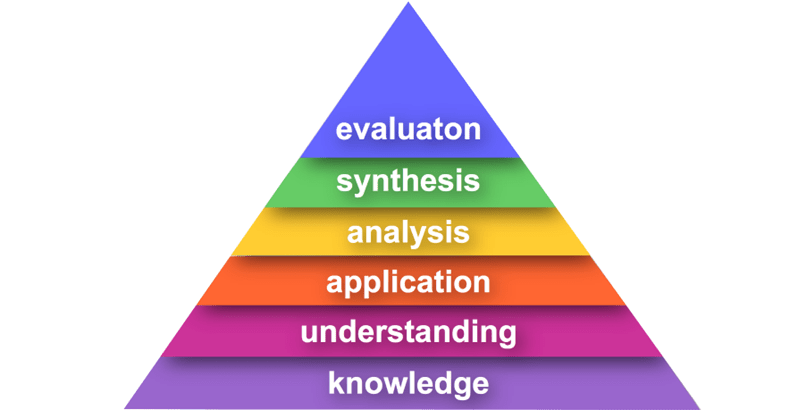
Figure 1 Bloom’s Taxonomy (bing.com/images)
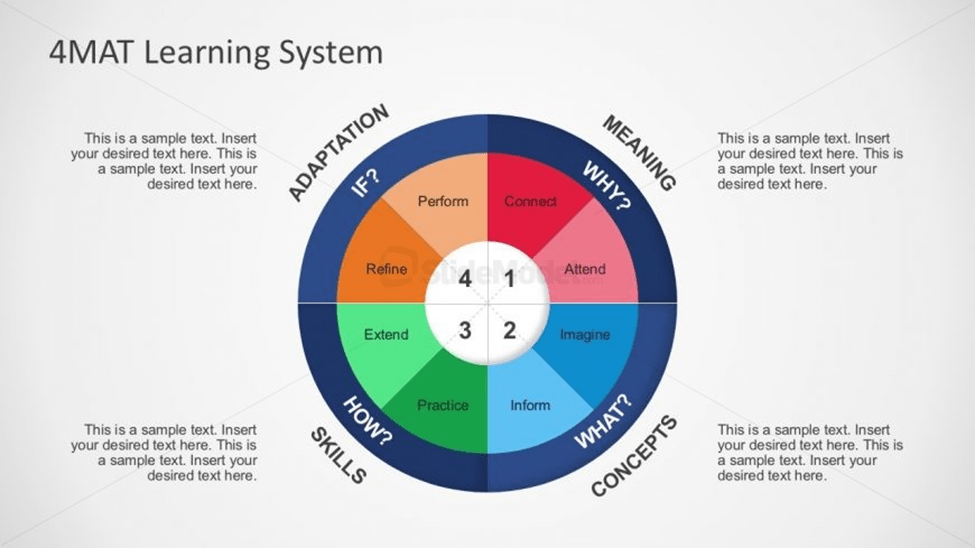
Figure 2 4MAT Learning System (bing.com/images)
Addendum
Figure 1
Bloom’s taxonomy pictures. Retrieved from: https://www.bing.com/images/search?view=detailV2&ccid=tVV3%2bEEE&id=F4A46F4640785BA83064A21F5D7A4F0227BA893B&thid=OIP.tVV3-EEEC8MRnqKlIljdjgHaFQ&mediaurl=https%3a%2f%2fkodosurvey.com%2fsites%2fdefault%2ffiles%2finl
Figure 2
4MAT Learning System. Retrieved from: https://www.bing.com/images/search?view=detailV2&ccid=GIU17tN1&id=0AC458A1705F4E00B6CB6EE9B25BD1EDBC9CC72F&thid=OIP.GIU17tN1x8c2UKi5SAwqEgHaEK&mediaurl=https%3A%2F%2Fcdn.slidemodel.com%2F
EDU605_30_Differentiated Instruction_2023_24_TERM1 Unit 6 Blog Connections
Differentiating Content, Process and Product in Professional Context
Andrew Parrella – Student Master of Education
Post University
Dr. Martha Bless – Instructor
Differentiation learning in any context requires that the designer of a curriculum be able to be tailored to a student’s need. We must keep the “what students learn relatively steady, while changing how we give access to the content to match students’ needs” (Tomlinson, 2001, p. 72).
Addressing Content in Learning Environment
Material or Content of a curriculum must be able show that it addresses, combinations of “readiness, interest, and learning profile” which would address whether the content is responsive to the learner. Examples of readiness differentiation would be to goal match the material to “student’s capacity to read and understand it” (Tomlinson, 2001, p. 73).
As a trainer and mentor in current field of entertainment, the role in creating content that is understood, by addressing the readiness of the learner is tailored to first the personality expression of the learner, then the previous assessed skills of the learner for the job description, and how the comfort level manner of the student appears to learn best. Then, a combination of the best profile techniques and strategies of delivering that learning can take place. The goal of aligning that presented format of material to each new employee or department worker may be slightly different. What content the worker/learner is presented with therefore would be dependent on the material such as basic customer service skills and could include linear learning for progression skills necessary to the job. This would be like students in school learning “spelling or math computation” meaning the manner and content itself could be altered in approach (Tomlinson, 2001, p. 72).
Because students in all settings respond to various ways of learning differently, some ways to help in the process in present or future learning scenarios could include an informal Learning Contracts which are skill and content driven as well as with variations of inclusionary material designed to have students “map out their plan” and serves to have accountability of shared goals and independent work formats are useful too (Tomlinson, 2001, p. 76). This method allows commitment and accountability with positive reinforcement and feedback.
Another way is the “Minilessons” useful for quicker learning and can “target content to students’ readiness, interests, or learning profile” (Tomlinson, 2001, p. 76). This quickly reviews, sorts, and focuses content and can help with limited time situations at all ages and environments.
Addressing Process in Learning Environment
Because a skill or idea must have a connection to a learner’s sensory cognitive processing, it would only make sense to have a “sense-making activity” that is focusing on the essential part of something a student needs to “know, understand, and be able to do” (Tomlinson, 2001, p. 79). Entertainment has many sensory visual examples from a fully functional and highly designed gaming floor, hotel, concert areas, retail shops and of course many different cultured people. To have a learner understand or use be thinking at high levels, and use of a “key skill(s) to understand a “key idea(s)” is where the processing will be imbedded and transferred.
Therefore, interest and high-level thinking by students will drive the activity because it uses essential skills by making or doing something with the knowledge (Tomlinson, 2001, p. 80).
Each newly trained employee must apply customer service language, watch, observe, incorporate, and deliver the first step of learning computer skills, reading gaming notes, then interacting with people from many varied backgrounds, cultures, and mixed abilities.
Quality comes best when the instructional strategies from multiple intelligences, interest groups, graphic organizers, complex instruction, concept attainment, and independent study, effective practice of skills is used to be effective and Differentiated Instruction is available and ready (Tomlinson, 2001, p. 81).
Differentiating Products
Here is where the long-term “endeavor” by students or in my present setting workers is now expressed. The learner must express, thing, re-think, broaden, extend, and take ownership of their training from communicating professionally, show ownership of their current position, show application of making critical guest decisions some involving monetary transactions, and continually make split-second judgments to support the guest, organization, safety policies and human resource policies.
Motivation for these tasks involves time and evolves over time. The concept of worker or student ownership on their learning and the focus on effective “product assignments” that are motivating go directly back to the creator (Tomlinson, 2001, p. 85).
Here, assessment can always be applied – even testing by combinations to maximize the “opportunity to think about, apply and demonstrate what they have learned” (Tomlinson, 2001, p. 85). “Core expectations for quality worker/students to pursue in content in their products” (Tomlinson, 2001, p. 85), is crucial and the teacher or curriculum designer needs to communicate properly. It is an ongoing exchange of communication.
Progress or scaffolding through progressive stages, helps workers/student obtain success by carefully creating a positive outcome. This outcome can be altered or edited for even more success (Tomlinson, 2001, p. 86).
In a formal school setting examples of art inclusion are very useful to be inclusive of the beginnings of school-based learning for younger learners. However, all ages can benefit from this approach. If one cannot understand a concept that is written, they may need extra verbal ques, or a picture or another worker to demonstrate a skill for them. They may also need audio guides as some of the background noise may not induce easy learning. In addition, some workers may have social or emotional issues that require more time to learn a skill or have a learning disability or have visual issues or sensory issues like needing a wheelchair for example.
These differentiated strategies are but a handful of ways to help people who are in a learning environment in a work or school setting. Often the school is the beginning part of a larger introduction to the bigger learning environment of work and then a lifelong journey.
If a curriculum or learning environment offers remedies or strategies to address people with different needs, then we can say we have combined factors such as student preferences, cultural needs, LD needs and others, that address this delivery of a unique learning preference design model. This goal can make preferences address complex issues – even help teachers in that style addressing the need for “sensitivity” in the options that are creative towards the goal (Tomlinson, 2001, p. 62).
Shared learning preferences of teacher and student can happen. This will be a positive for those who respond easily but others will need more assistance. Student reflection on preferences and communication between student/teacher helps to with addressing variations of the combination such as competitive and collaborative learning or whole-to-part or part-to whole learning and engages the student in self-awareness of different learning and “many routes to learning” (Tomlinson, 2001, p. 63). The importance of using “several intelligences as ways for students to explore or express ideas,” means partnering with each other for best desired learning.
Matching learning to the interest of a student or Interest Differentiation is one way to take advantage of a student’s natural likes. By focusing on the student’s strengths, we can design activities that include that interest- we can tailor the learning to encourage all the things that may excite or motivate the learner for better interest. Therefore, one of the strongest concepts of creating a superior learning environment is encourage the inclusion of subjects of interest that encourage the Interest Differentiation (Tomlinson, 2001, p. 73).
By being a “student of your students” (Tomlinson, 2001, p. 60), we can expand the learning experience into greater visions that include tapping into the “private universe” of ourselves and present a welcoming approach to students with their own “private universes different from our own” (Tomlinson, 2001, p. 63).
References
Literacyhead Lessons: Using Art to Teach Reading and Writing (2012, June 17). [Video File]. YouTube: https://www.youtube.com/watch?v=h0ehvCnSV3s
Tomlinson, C. A. (2001). How to differentiate instruction in mixed-ability classrooms. Alexandria, Va: Association for Supervision and Curriculum Development.
Appendix
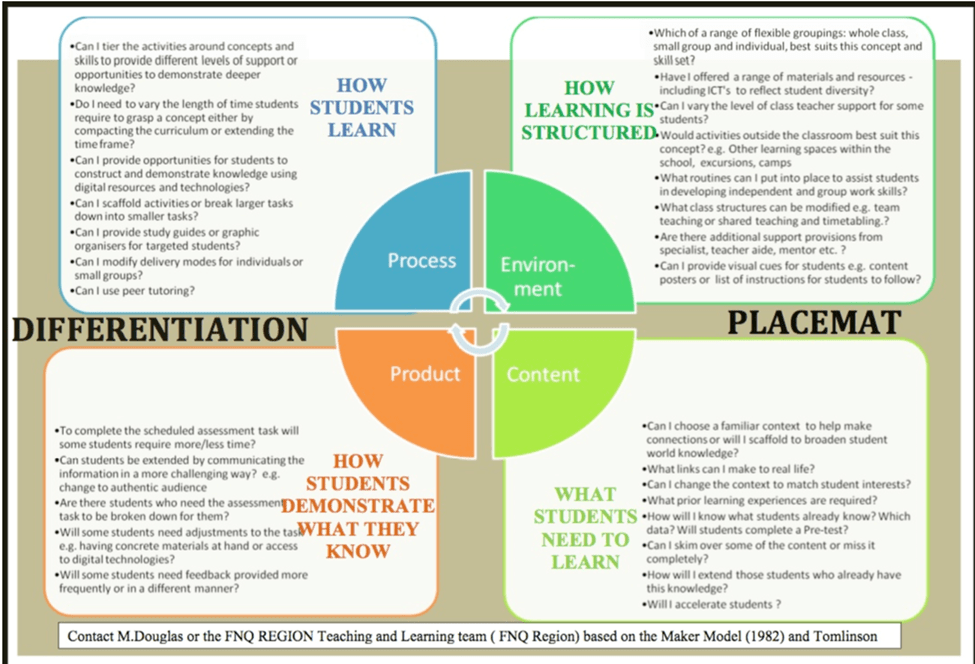
Figure 1 Differentiation Placemat (FNQ REGION & Tomlinson, 1982)
Appendix
Figure 1
FNQ Region Teaching and Learning team and Tomlinson, C. (1982). Differentiation Placemat. Retrieved from: https://www.bing.com/images/search?view=detailV2&ccid=dGXz9p8f&id=CF44B7DEC8D231C3A369CB68314A0025ED74C3BA&thid=OIP.dGXz9p8fbIjIWHu8Kp7m8QHaFG&mediaurl=https%3a%2f%2fth.bing.com%2fth%2fid%2fR.7465f3f69f1f6c88c8587bbc2a9ee6f1%3frik%3dusN07SUASjFoyw%26riu%3dhttp%253a%252f%252feweber4720ass3.weebly.com%252fuploads%252f3%252f0%252f7%252f5%252f30752019%252f9581327_orig.jpg%26ehk%3djZO2Zc4uxqvjhdN6KTfUkxd77J157MjfBE4DTxjnQ10%253d%26risl%3d%26pid%3dImgRaw%26r%3d0&exph=755&expw=1095&q=pictures+on+content%2c+process+and+product+on+learning+strategies+differentiated+learning&simid=608029196257339043&FORM=IRPRST&ck=50755E62F8EEF935559953529C008371&selectedIndex=0&idpp=overlayview&ajaxhist=0&ajaxserp=0
EDU605_30_Differentiated Instruction_2023_24_TERM1
Unit 7 – Tiered and Scaffolding Instructions related to professional context and theoretical research
By Andrew Parrella – M. Ed. Student
Post University
Dr. Martha Bless-Instructor
Adult learning is not that far removed from learning when we are young however the unique perspective of the experience of the adult learners is a differentiating factor. “It is…. the life context of adults and some of the distinguishing characteristics of the adult learning process that differentiate adult education from other kinds of education” (Merriam, Caffarella & Baumgartner, 2007 p. ix).
Being this a given fact due to age and exposure, one could pose that these more experienced learners would be able to learn things at a level far superior to those younger. This however is often not the case, and we must determine knowing “who the adult learner is,” as this can have an influence on the learning and the social context of the “how” or influences they have that can mold or “shape” the learning that these adults may be exposed to” (Merriam, Caffarella & Baumgartner, 2007 p. ix).
Because “socialcultural context” (Merriam, Caffarella & Baumgartner, 2007 p. ix), of the learning is a key component influencing the adult learner, we could also posture that we may have an environment that can differentiate these differences or experiences which could pose various learning facilitated adjustments or specialized tiered or scaffolded learning.
Focusing specifically for the purpose of addressing a different type of learner, the adult, we can divide a process that this article or guide suggests by the authors to set up a curriculum into four areas: Context, Theories and Models, Newer Approaches, Intersecting topics with adult learning including memory and cognition, development, and others.
Context deals with the sociocultural context that adults face using example in the article based on a North America and forces facing learners including demographic, globalization, and technology (Merriam, Caffarella & Baumgartner, 2007 p. xi).
Environments of the learning is another related context which coincides with the sociocultural aspect of these adult learners and the where could be in traditional education settings, nontraditional educational settings, hospitals, government agencies, nonformal and even other agencies, where the learning is more self-directed or nonstructured (Merriam, Caffarella & Baumgartner, 2007 p. ix).
Gaps, access, and opportunities, and underlying these is the theme of differentiated learning and a paradigm shift that is needed as learned from recent EDU605_30 Differentiated instruction_2023_24_TERM1 specifically as suggested in Unit 2. Here, a paradigm shift of the concept of differentiated teaching and the creation of a classroom to be successful for the learner. The teacher would not be the keeper of dispenser of knowledge but rather as an “organizer of learning opportunities” (Tomlinson, 2001, p. 16).
Because coaching and mentoring and giving students responsibility for learning is important, this would be and should be applied even more so with adults as this population would have different “readiness” levels or possibly similar readiness levels than other learners. Teacher can assess the student’s readiness or “read” (Tomlinson, 2001. p. 16), by interpreting the “clues” of this groups learning preferences as well. We may have an adult who understands the linguistic language teaching by listening and writing down on paper, whereby another learner may understand graphs better or numbers. This happens continually with different learning settings both young and adult settings, but the curriculum must be readily designed with differentiating strategies that are scaffolded or tiered to address these ongoing needs. One could teach one student to read an instructional paragraph on how to access a guest profile and issue a comp for example, whereas another student would need this to be a picture of the computer icon or number line for example. For others, this could be a video, or even group discussion to compare methods or techniques to go from point A to point B. Some best practices would be for teachers/educators to understand that for a classroom to succeed in the differentiated learning, that the practice or use of the practice only being successful if it works for the “individual learner” (Tomlinson, 2001, p. 6). This would not be different for children or adults and stressing on “individual” is the key as everyone is different.
The author’s do differentiate in the concept following critiques of theories of Knowles’s (1980) concept of andragogy and adults “five characteristics of adult learners, andragogy focuses on the adult learner as distinguished from preadult learners” (Merriam, Caffarella & Baumgartner, 2007 p. xii).
Included in the comparison of adult learner specifics relevant to their own differentiated necessities from McClusky’s (1970) “theory of margin, to Illeris’s (2004a) three dimensions of learning model, and Jarvis’s (2006) learning model, there has also been much research on the self-directed learning (Merriam, Caffarella & Baumgartner, 2007 p. xiii).
Both transformation learning as well as experience in learning that shapes outcome and the need for addressing areas which require different types of instruction. Included in this articles research are chapters on “somatic learning, spirituality and learning, and narrative approaches to learning” (Merriam, Caffarella & Baumgartner, 2007 p. ix).
The article poses additional thinking in the learning process and delivery including “critical theory, postmodernism, and feminist pedagogy (Merriam, Caffarella & Baumgartner, 2007 p. xiii). The broad yet specific encompassing of “philosophy, psychology, sociology, biology and so on,” that has a bearing on adult learning is also addressed (Merriam, Caffarella & Baumgartner, 2007 p. xiii).
Economic factors and its influence several years ago on all learners and then COVID-19 sudden necessitated changes, post COVID-19 changes have created new challenges to learner and social context (Merriam, Caffarella & Baumgartner, 2007).
Technology offers and challenges all learners’ opportunities and challenges that can need differentiated and scaffolded learning addressing each part in steps to be learned to the next level. Rhetoric of values and reality of learning opportunities are apparent still (Merriam, Caffarella & Baumgartner, 2007 p. xiii).
As stated in this article, “The question is no longer whether adult learning is needed, and how important it is. The issued today is how to respond to this increasing and diversified demand, how to manage this explosion” (p. 21) (as cited in Merriam, Caffarella & Baumgartner, 2007 p. 5).
As noted in, computer skills and adaptation to the ongoing environmental changes has seen an “interlocking of adult learning needs with the social context in which they occur” (Merriam, Caffarella & Baumgartner, 2007 p. 6).
We can include methods and strategies to address these learners and scaffolding is one way, “Scaffolding and differentiation do have something in common.” “In order to meet students where they are and appropriately scaffold a lesson or differentiate instruction, you have to know the individual and collective zone of proximal development (ZPD) of your learners” (Alber, 2014, para4).
Social context and that which occurs has a strong effect on adult learners and includes demographics, global economy, and information and technology (Merriam, Caffarella & Baumgartner, 2007 p. 7). Whether learning is self-initiated, or society driven, the response by adults can have “emerging groups of learners with special needs” (Merriam, Caffarella & Baumgartner, 2007 p. 7). This is apparent in training both in my present environment in entertainment, my experience in healthcare settings and the public and private school settings with all age groups. However, adults may bring more complex or more of the need for certain learning strategies with them.
Making learning, personally meaningful, challenging, appropriate for the learner level, adding choice and allowing knew knowledge, social interaction, feedback, use of different strategies, positive emotional climates, and a conducive environment that is supportive of any differences are ways to address the learning (Tomlinson, 2001 p. 17). We can improvise, use clarity for focus (Tomlinson, 2001, p. 19), and always use assessments as a “roadmap” for the before and after checklist for changes or improvement to the curriculum and need for differentiated methods through tiered or scaffolded learning (Tomlinson, 2001).
The authors additional back up their suggestions by including specific historical demographic, and generation examples of how “baby-boomers between 1946-1964,” affecting population changes for all areas of society but especially education and shifts towards adult learners being a majority with “Americans over the age of sixty-five outnumbered those under twenty-five” (Merriam, Caffarella & Baumgartner, 2007 p. 8). An increase in the number of older adults is “two demographic factors influencing the provision of learning activities in our society” (Merriam, Caffarella & Baumgartner, 2007 p. 9). This and the social influence of “growing cultural and ethnic diversity of America’s population affecting learning in language, culture, and economic factors. This, and “countertrend: a backlash against uniformity” (Merriam, Caffarella & Baumgartner, 2007 p. 11), the authors pose that powerful forces are working to make instructional programs a focus of widespread study and change to strategize, collaborate, and differentiate needs to these groups as well (Merriam, Caffarella & Baumgartner, 2007 p. 11).
Driving all the former factors in necessitating education changes for adult learners is globalization and the effects of pressures it creates on how to proceed. “Adult education practice in the age of globalization increasingly becomes a toolkit for quick fixes by means of tailor-made and individualized short-term, yet lucrative, trainings” (Finger, 2005b, p. 272 as cited in (Merriam, Caffarella & Baumgartner, 2007 p. 15).
As stated in this article and a good argument is, “To survive in the global economy, an organization needs to evolve into a ‘learning organization’ whereby new and expansive patterns are permitted, allowing employees to learn individually and collectively (continually learn to learn)” (Gardner, 1996, p. 43 as cited in Merriam, Caffarella & Baumgartner, 2007 p. 6).
Great opportunities for learning can happen and the authors list that even though there are challenges in the learning design that “the proliferation of information technologies and exponential increases in the production of information have created greater opportunities for informal learning…for people in all walks of life” (Livingstone, 2001, p. 20 as cited in Merriam, Caffarella & Baumgartner, 2007 p. 21).
Onward to recommendations of Learning Environments that have the concept of use of clear, well-organized education such as supplemental education examples of community colleges which address adding the “indigenous” to traditional settings became apparent and the introduction of nonformal educational supplements such as “National Issues Forums” by the Kettering Foundation” (Merriam, Caffarella & Baumgartner, 2007 p. 31).
The authors back up recent data recommendations that community-based learning is a valid way to address many adults people who may learn non-traditionally. Since differentiated teaching should be responsive, we can understand what is happening and being or needing to be addressed. This, if a different environment setting was introduced would be “responsive teaching” (Tomlinson & Eidson, 2003, p.2).
Some issues of relevance with the community based learning and the great flexibility it comes with can have a two-edged sword of lack of checks and balances or resources that may not be in place with a more formalized and standardized education setting however – “The continuing search for and worry about resources, in combination with long and often difficult working conditions, can lead to staff burnout very quickly, even for the most committed individuals” (Merriam, Caffarella & Baumgartner, 2007 p. 33).
The authors do include some excellent examples of how indigenous learning is linked with a learner’s culture and how processes and structure in that learning both in history and forms such as “oral traditions and art forms,” being able to enhance on-formal and possibly formal programs. This would align with Bloom’s Taxonomy of Knowledge, Comprehension, Application, Analysis, Synthesis, and Evaluation through a differentiated or tiered structured way (Johnson, 2010).
Descriptions that the authors cite on indigenous people’s use scholarly and more popular literature is best described in the tribal foundations of American Indian education in “shared by Indigenous cultures of the world” (p. 33, as cited in (Merriam, Caffarella & Baumgartner, 2007 p. 34), where “Tribal teaching and learning were intertwined with the daily lives of both teacher and learner. Tribal education was a natural outcome of living in close communion with each other and the natural environment. The living place, the learner’s extended family, the clan and tribe provided the context and source for teaching…. Informality characterized the greater part of American Indican teaching and learning…However, formal learning was usually required in the transfer of sacred knowledge” (Cajete 1994 as cite in Merriam, Caffarella & Baumgartner, 2007 p. 34).
This quote by Cajete sums up so well a visionary view of teaching and learning through a parable, “It is an essential, life-sharing act of each generation of a People to nurture that which has given them Life and to preserve for future generations the guiding stories of their collective journey to find life” (Cajete 1994, p. 187 as cited in Merriam, Caffarella & Baumgartner, 2007 p. 34).
Culture and the influences on learning are profound to say the least and the authors also include Johnstone and Rivera (1965) on adults learning in relationship to self-study and practical and skill learning was significant. This showed a natural out-of-formal learning environment that people from a “twelve thousand household” sample (Merriam, Caffarella & Baumgartner, 2007 p. 55), indicating the practical learning was done and the inclusion of “independent self-education” and formal education was significant. Trends in the years of 1969 with subsequent random years conducted by the National Center for Education Statistics (NCED) by the U.S. Department of Education showed from surveys that many adults participated in further education due to “social experiences that have shaped their lives” (Merriam, Caffarella & Baumgartner, 2007 p. 78). Significant are the influences of the author’s specifics on who, why, and when adult education takes place and the relationship to type of learning to address these populations.
In backing up this entire group of unit’s theories, these authors addressed the notion that Adult Learning Models stress that “readiness for self-directed learning and the concept of autonomy” are key issues affecting the process (Merriam, Caffarella & Baumgartner, 2007 p. 80).
Transformational learning included changes in cognition and “Mezirow’s 1991 as cited in Merriam, Caffarella & Baumgartner, 2007 p. 80), perspective transformation and Freire’s (1970 as cited in Merriam, Caffarella & Baumgartner, 2007 p. 80), conscientization” “content that changes in perspective or consciousness are the defining characteristic of learning in adulthood” (Merriam, Caffarella & Baumgartner, 2007 p. 80). This can have significant influence over approaches to learning including tiered and differentiated learning for adults.
Since there is not a specific theory supporting separation of adult and children learners, the authors refer to andragogy, (Knowles 1968 as cited in Merriam, Caffarella & Baumgartner, 2007 p. 83), that supports focus on adult learners and his or her “life situation” (Merriam, Caffarella & Baumgartner, 2007 p. 83). This supports internal rather than external motivated learning and a tiered or scaffolded approach would be best if a focal point that motivating factor individualized target as well as the “why” part of learning what they are learning is key (Merriam, Caffarella & Baumgartner, 2007 p. 84).
More recent studies also stress andragogy in conjunction with “social capital theory” (Merriam, Caffarella & Baumgartner, 2007 p. 89), tighten any biases and to be more realistic to teaching strategies. Many other theorists studied by the authors included Gorham (1985), Rosenblum and Darkenwald (1983), and Courtney, Arnold, and Kim (1994) finding all the previous theories of adult learners in relation to younger learners “inconclusive” (Merriam, Caffarella & Baumgartner, 2007 p. 90).
The most interesting theory of adult learning, perhaps helping in discovery of how to address tiered-scaffolded learning is in the Margin of Power theory (McClusky 1970, p. 83 as cited in (Merriam, Caffarella & Baumgartner, 2007 p. 94), where performance related to resilience, coping skills of the learner and the adult having a “margin of power” to apply the process. An example of a student going to school to become a physician’s assistant is relevant to their ability to juggle their life issues with no control and another student who is a marketer and who employs a nanny for her children to free up her time. The ability of control over one’s own learning environment is the crucial factor.
Learning influence studied by Illeris (2002 as cited in Merriam, Caffarella & Baumgartner, 2007 p. 97), focus on the effects of cognition, emotion, and society. Cognition and emotion being internal processes whereby environmental or societal is external with outside participation. These are significant in any design for implementation of a tiered or scaffolded approach as the understanding of the interplay is critical and recognition of everyone’s process is key.
As stated in a peer reviewed article by Thomas Bettinger, “Indeed, an integrative approach to learning (with consideration of context) is advocated” (Bettinger, 2007, para 7).
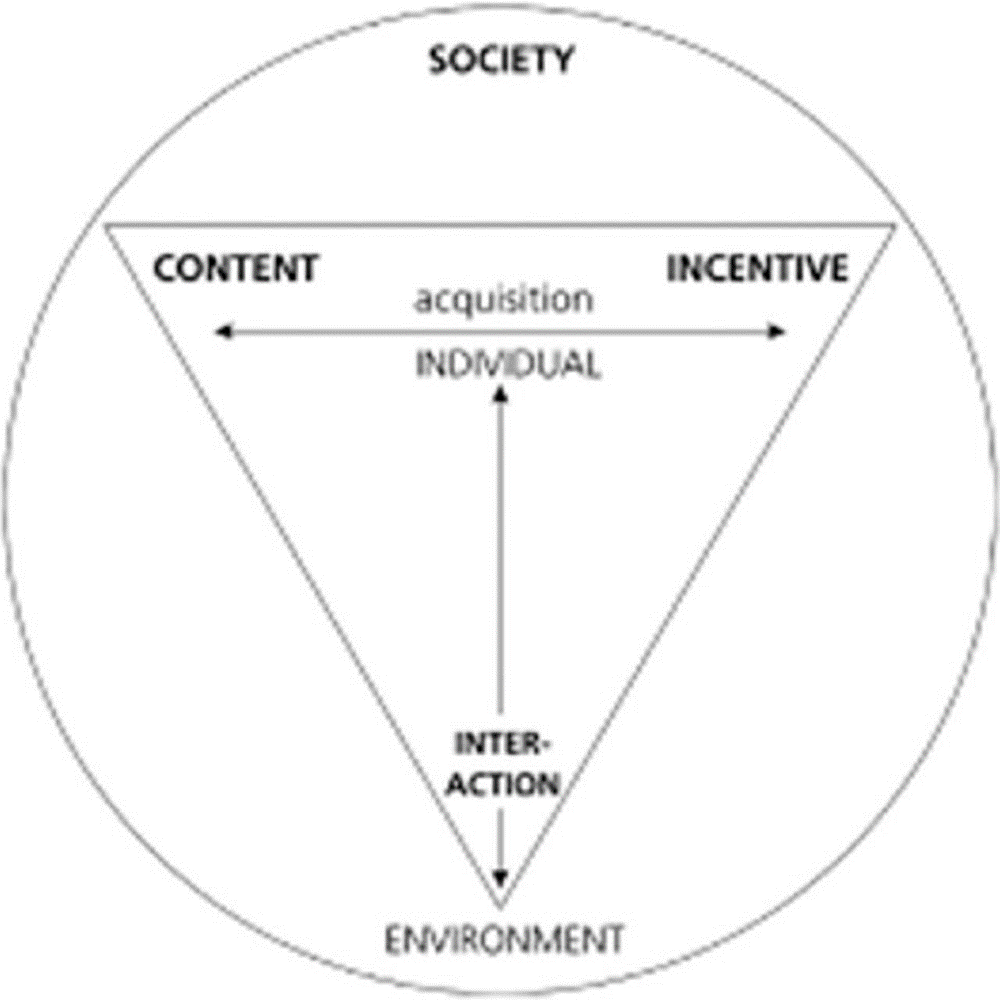
Figure 1 Illeris Model Three dimension of Learning. (www.bing.com n.d)
References
Alber, R. (2014). Scaffolding strategies to use with your students [Web log].
Bettinger, T. V. (2007). Learning in Adulthood: A Comprehensive Guide (3rd ed.). Adult Education Quarterly, 58(1), 81–82. https://doi-org.postu.idm.oclc.org/10.1177/0741713607305947
Johnson, A. (2010, June 19). Blooms Taxonomy to create tiered instruction [Video File]. YouTube. Blooms Taxonomy to create tiered instruction- YouTube.
Merriam, S. B., Caffarella, R. S., & Baumgartner, L. M. (2007). Learning in Adulthood: A Comprehensive Guide. Vol. 3rd ed. Jossey-Bass.
Tomlinson, C. A. (2001). How to differentiate instruction in mixed-ability classrooms. Alexandria, VA: Association for Supervision and Curriculum Development.
Tomlinson, C. A. & Eidson, C. C. (2003). Differentiation in practice: A resource guide for differentiating curriculum, grades K-5. Alexandria, Va: Association for Supervision and Curriculum Development
Appendix
Figure 1
Illeris Model Three dimension of Learning. (n.d.) illeris diagrams – Bing images
Differentiation and Differentiated Learning
Andrew Parrella
Master of Education Student
Post University EDU605_30
Differentiated Instruction_2023_24 Term 1
Dr. Martha Bless – Instructor
I have been enlightened throughout this course in learning the many ways that learners learn as well as how we have discovered and grown in the field of education in understanding more about the ways people learn and the current methods taking place that are helping classrooms be more effective. This is includes a differentiated learning approach and a well-designed classroom by Differentiated Instruction with strategies that have proven to be effective over time to help learners develop to their full potential.
A paradigm shift was needed in the teaching methods and this shift was that the teacher would not be just a dispenser of knowledge but rather an “organizer of learning opportunities” (Tomlinson, 2001, p. 16)
By “reading their students” (Tomlinson, 2001, p. 16), the theme of teachers keeping students’ attention and understanding in the learning process can be more readily done. By and through activity and exploration, the processes can help with students being able to be more prepared and better in their understanding of concepts (Tomlinson, 2001, p. 16).
As the differentiated classroom is devised and constantly adjusted, the precedence for this type of learning can only benefit the learner as the learning become student centered. Student readiness, interpretation, and learning preferences can then be gathered and these ideas can be the necessary “clues” (Tomlinson, 2001, p. 16) that can stimulate more expression of ideas, understanding and the value that a differentiated teaching strategy can address. By incorporating these in a curriculum, all parties benefit including the student, teacher, and parents.
Flexibility, assessment, student centered choice, whole-group-individual, projects, technology, compacting, peer involvement, and readiness of student collaborative learning preference focus, have far-reaching potential in transforming deeper lasting learning for all students.
Piaget states (1969), “The heartbreaking difficulty in pedagogy, as indeed in medicine and other branches of knowledge, as indeed in medicine and other branches of knowledge that partake at the same time of art and science, is, fact, that the best methods are also the most difficult ones” (as cited in Tomlinson, 2001, p. 32).
References
Tomlinson, C. A. (2001). How to differentiate instruction in mixed-ability classrooms. Alexandria, Va: Association for Supervision and Curriculum Development.
Mind Map on Differentiated Learning
Differentiation and Differentiated Learning MindMap
Andrew Parrella
Master of Education Student
Post University EDU605_30
Differentiated Instruction_2023_24 Term 1
Dr. Martha Bless – Instructor
Mind Map from Unit One and Mind Map from Unit Eight
Andrew Parrella
Differentiated Learning Plan
Andrew Parrella
Master of Education Student
Post University EDU605_30
Differentiated Instruction_2023_24 Term 1
Dr. Martha Bless – Instructor
Andrew Parrella
Master of Education Student
Post University
Reflections on Differentiated Instruction and Instructional Plan – Andrew Parrella
Lifelong learning is something that encompasses everyone in a vast array of life situations. To make this road traveled more appealing and broaden all learner’s ability to reach his or her full potential, the process of incorporationg a differentiated instructional plan can help enable learners to reach their full potential in learning so that they may be successful in the boarder learning environment of life. These theories, with helpful and proven strategies for success are pathways to help, enrich, and enlighten every learner throughout their life.
Andrew Parrella
 Education2022

