This blog is a focus on recent learning from Post University Course titled: EDU510_30_The Cognitive Science of Teaching & Learning_2022.23 Term 3
By Andrew Parrella – Student in MEd Program
Instructor: Dr. Mary Mills
December 7, 2022
Theories of learning and Cognitive Processes
The relationship between the different theories of learning is vast and can be applied to modern teaching principles when we understand more about how our cognitive processes work. In cognitive linguistics for example, neuroscience from the theoretical and experimental historical sense has used methods that can adhere to a philosophy that allows cognitive science to be able to deal with fundamental issues that say that an experimental and computational approach towards the mind is based on a “normative” base of “questions” (Thagard, 2019). These questions help us have a starting point to better develop the hypothesis that, “The central hypothesis of cognitive science is that thinking can best be understood in terms of representational structures in the mind and computational procedures that operate on those structures” (Thagard, 2019). We can then break down the theory better to be able to apply such methods towards teaching and learning. For example, in Representation and Computation and the use of “connectionist” theories we must include neural networks be they artificial or other methods. (Thagard, 2019).
We can further propose that our brains and learning are similar to the belief of Connectionists and their proposals of, “….novel ideas about representation and computation that use neurons and their connections as inspirations for data structures, and neuron firing and spreading activation as inspirations for algorithms….Cognitive science then works with complex 3-way analogy among the mind, the brain, and computers” (Thagard, 2019).
Formal Logic, rules, and concepts then become the underlying base from which we can then move forward to apply learning. As state by (Thagard, 2019), “Concept application is then a matter of getting an approximate match between concepts and the world” (Thagard, 2019).
The relationships between learning, teaching principles and cognitive aspects of learning can be brought forward through creating effective learning communities. This includes environments that have the four interdependent aspects of focus on learners, well-organized knowledge, ongoing assessments for understanding and community support and challenge (Bransford, et al, 2000).
According to the cognitive research covered in How People Learn, environments that best promote learning have four interdependent aspects—they focus on learners, well-organized knowledge, ongoing assessment for understanding, and community support and challenge. (Bransford, et al, 2000).
In the YouTube Video How We Learn, the connection of traditional learning methods to modern day learning methods is relevant in that in the past the standards were conformity but with over one hundred billion neurons and people having unique brain cells, the focus is turning to “hijacking brains,” (YouTube). This disassembling of our past methods and the focus on tapping into our short-term and long-term memory with the environments of pain free and safe, risk-free learning is relevant. The student must be, free from pain, be safe, and have an environment that is risk-free including these three ingredients to help proficiency through Cognitive Conflict being intrinsically brought about through motivation (YouTube).
Mental computational methods that can provide greater teaching experiences can include Cognitive Science. These techniques can be used in many age groups for learning and my past experiences with many of them have helped learners in many teaching situations and were successful for students. (YouTube Video, Cognitive Science: How to Improve Your Teaching)
1. Understanding how students learn
2. Sensory Memory, Working, Long-Term Memory
(By helping students throughout these each of these steps by identifying the student’s sensory memory, then applying instructions through working memory by using this to long-term memory).
3. Meaning- students learn better through meaningful experiences – relationship to world
4. Repeating information rehearsed but through questions
5. Time of class instruction (first and last time of class) best for retention (Driscoll, 2005)
6. Practice
7. Techniques – specifics, storytelling, journaling, Imagery, self-questioning, diagrams, note-taking, outlines, rubrics, Mnemonics, categorization
Important Processes of Formal Logic, Concepts, Analogies, Images and Connectionism in Learning
I would say that Concepts are paramount in my history in my professions as they define the ability of people and learners to have a base to start with. “Concept application is then a matter of getting an approximate match between concepts and the world (Thagard, 2019). If we can connect to the world, we can learn infinitely and then define and refine as we go to sort the data out. In addition, “Concepts can be translated into rules, but they bundle information differently than sets of rules, making possible different computational procedures (Thagard, 2019). This, the translation part is especially important as it opens interpretation methods into the thread of cognition. Remarkably, just as a student organizing data into concepts, slots, and/or hierarchies to determine what sentence structure to use when speaking, writing, or in math when solving a problem such as algebra beginning to end with a pattern.
Images are so important in the mental representation of our cognition and by and through, “Pictorial representations capture visual and spatial information in a much more usable form than lengthy verbal descriptions…. Computational procedures well suited to visual representations include inspecting, finding, zooming, rotating, and transforming (Thagard, 2019). Through the process of teaching to anyone, questions have been answered by a simple picture saving a great deal of time instead of the use of language through description or written sentences when someone just does not understand. Remembering shows on TV years ago when people would see images of people represented through certain dress or hair style such as during the 1970’s show where boys had long hair depicting that era or even back further when crew cuts were in and the muscle cars of the 1950s were popular. People often would either gravitate towards learning about issues based on pictures such as movies in black and while (The Wizard of OZ), depicting a very notable period when color films/movies and that technology were being perfected. Also, remember my history class when on Fridays, our teacher would always have a film on American history where students could see the pictures such as the “War of 1812” and family’s struggling to fight for freedom, etc. We can see this as, “The processes for constructing and manipulating images produce the intelligent behavior (Thagard, 2019). I remember when teaching many times during a second-grade class where I would have to use the image of a picture to reinforce a concept of defining a word spelling of a commonly use word such as: there, their or they’re. That required using objects or people to have students get a picture of the difference!
Game Based Learning as Strategy in Learning
Game based learning can be an instructional strategy and approach by increasing student engagement and motivation by enhancing student’s mental representations through Logic, Rules, Concepts, and Images by introducing different or new rules, concepts, and images into the teaching process.
Instructional strategies that can be creative and have proven in increased learning are enhancing the five mental representations. These strategies are: Explicit Teaching, Group Learning, Reflection and Analogies (Ferlazzo, 2017). In his instructional video on this process, we learn how the transfer of and the cognitive ability to embrace the learning challenges is done through explicit teaching, group learning, generalizing, reflection, analogies, and metaphors. To make transfer of learning from situation to situation is very dependent on near and far. Near is that applied to similar subject matter, far applied to a different matter (Ferlazzo, 2017).
Through the former strategies it is in the application of all the five processes which help the students learn. This interchange of information helps define the personal improvement process geared to the student’s learning process. This is especially important as each person learns at different rates, ways, and methods.
Another exceptionally interesting and proven method for teaching and trainers which is now breaking the mold on old teaching methods is games. Games are methods of learning just as books are ways for people to learn. Examples in the YouTube video by (Thomas, 2018), documents examples through Texas A&M University of games being introduced in Art History, with a “twenty-seven% improvement in learning (Thomas, 2018). Other subjects in English in Poland have been documented and the examples in the video of getting a 100% mastery like running a marathon to strive for that is most important in game playing as it is always to achieve that percent.
Educational standards of 100, 90, 80, 70 percent and so forth are used in academic measurement but in games, the goal is always a winning 100%. Other examples, such as Engineering, calculus where failure and fear are common, are being used to increase the percentage of learning and success. Engagement, motivation, and advancement of detailed information learning have improved with game introduction and application (Thomas, 2018). In Italy, learning and understanding went up to 100% in a documented classroom game inclusion (Thomas, 2018).
For application in currently used work environments, games can be slowly included in my work environment to apply to customer relations and guest understanding of learning their benefits at the casino in relationship to even better gambling or gaming habits. In other environments, such as with past teaching jobs, games have proven effective by tapping into different students learning comfort levels with understanding a concept through images, analogies to life issues (especially in history classes), and use of logic or logical conclusions as to why concepts they are learning such as language or mathematics are used to communicate, measure or conduct basic monetary transactions for example.
One of the most interesting concepts of the video describe how fear of failure was changed by game introduction for 100% proficiency in skills. This, and the concept of rewinding a plan of action and the example of planning for a “window seat” on a plane (Thomas, 2018. is outstanding in that we can apply multi transitional change in the learning process as necessary or desired. This can reduce learning time, increase proficiency, and even be positive economically for education cost savings.
Emotions Involvement in Learning and Roles of Teachers
Emotions and learning and the role of the teacher’s influence on game introduction into the learning environment can be positive. In Making Learning Whole: How Seven Principles of Teaching Can Transform Education, (Perkins, 2009) describes his recommendations of the seven principles that can be used to help change or transform the process. Because elements are crucial to the definition of how we learn as a base, we learn about them first then do the learning by his references to “elementitis” (Perkins, 2009), or putting parts of learning things together over time.
Discovering that piecemeal curriculums (Perkins, 2009), and referencing to Linda Darling-Hammond’s The Right to Learn, the problems with curriculum being such indicates a fractured system. Even the No Child Left Behind curriculum changes as noted in Educational Researcher by (Au, 2007), sorted this curriculum further diverting the parts or “bites” and did not solve this issue.
Hence, through the seven principles of learning:
Play the game- Threshold experience
Making the game worth playing- Clarification of what makes games worth playing
Working on the hard parts- Revisions for perfecting
Playing out of town- Stretching and adapting skills and insights
Uncover the hidden game – Smart strategy and multiple layers beneath the obvious – not misunderstanding – deep learning vs. surface skating
Learn from the team…and the other teams – Art and craft of coordinating
Learn the game of learning – Learning to learn. The self-managed learning challenging oneself.
As in Ellen Langer’s reference to mindless patterns of learning in The Power of Mindful Learning, (Perkins, 2009) reflects on a curriculum in need of reform. Games can change this pattern by as in language and math whereby the “why” is addresses and not just doing it for memory. History and science and the pattern of cognition may work differently as student’s cognition and motivation may be gravitated towards one subject more then another for example.
To achieve the necessary learning as used in Perkin’s model of baseball reference and step by step approach the incorporation of learning an action as well as learning the reasoning behind the action is enforced therefore learning is achieved and retained better. (Perkins, 2009).
In contrast to cognition however, emotion brings additional factors into play,” ….Some investigators use definitions that incorporate the concepts of drive and motivation: emotions are states elicited by rewards and punishers (Rolls, 2005)….Others favor the view that emotions are involved in the conscious (or unconscious) evaluation of events (Arnold, 1960) (i.e., appraisals)…In addition, “Some approaches focus on basic emotions (Ekman, 1992) (e.g., fear, anger), others on an extended set of emotions, including moral ones (Haidt, 2003; Moll et al., 2005) (e.g., pride, envy) (Pessoa, 2009).
Because the process of emotions involves the brains neuro-functions and the complex synapses of chemical reactions, the anatomical basis for cognitive and emotional interaction is dependent on our understanding of the emotion and cognition is anatomical in nature.
“Advances in our understanding of brain connectivity suggest that a given brain region is only a few synapses away from every other brain region (Sporns et al., 2004: Sporn and Zwi, 2004).” “…the brain is configured according to a small-world topology in which the path length between nodes is small-typically, cortical areas are connected directly or via just one or two intermediate areas (Hilgetag et al., 2000; Sporns et al., 2000) – and nodes are highly clustered (Sporns, 2006)…Thus, a careful consideration of brain connectivity is informative in understanding potential cognitive-emotional interactions” (Pessoa, 2009).
Recent studies have noted that in addition to that precious connection of emotion to cognition that, “Notably, recent anatomical evidence suggests the existence of specific topographically organized prefrontal-basal forebrain-prefrontal loops (Zaborszky et al., 1999; Zaborszky, 2002; Zaborszky et al., 2005), so that specific prefrontal cortical targets of the basal forebrain connect to back to sites from which the corticopetal fibers originate…such loops provide a direct substrate for cognitive-emotional integration….by allowing amaygdala signals to be broadcast widely….to be important for the control of attention” (Pessoa, 2009).
The factor of attention is key and the interaction of emotion and learning and “loops” providing cognitive-emotional integration and broadcasting widely is important in the control of attention and emotional learning (Pessoa, 2009).
Emotional Intelligence (EI) and its introduction as a valid form of learning to the process (Mayer, et al, 2008), even with the distinction of “nomologicality” (Pessoa, 2009).
Intrinsic and extrinsic motivation are relevant to learning (Mandler, 1975), and (Lyubomirsky et al. 2005)’s assertion that people can be better decision makers is based on specific-ability models that prioritize emotions in thinking and learning (Mayer et al., 2008).
Adults, children, and influence of all the colliding factors involved in emotions such as age, culture, inside developed beliefs, as well as outside influences can be so spread out on a spectrum that so many theories have developed, and differences have occurred as the influence of emotion and motivation. A prime example of this would be things like why one person would be motivated to do better in school, sports, music, outdoor activities, treatment of people, or duties at work. One individual may be motivated by money, the other by just helping people in a work setting. In other circumstances, some students love learning to learn, others are motivated by advancement in career that can be obtained through advanced degrees just as people in sports may be motivated by new adventures or winning as a form of best achievement. The differences are so varied and what motivates one person can be different for another. Hunger, thirst, community and tenacity or motivation through desperation.
The four ways of motivation as discussed as Instinct or evolution, traits, complex genetic predispositions versus drive reduction theory and homeostasis, incentives to entice or repel behaviors and Optimal Arousal motivation balance of stimulation and boredom, people are polar oriented, Maslow’s hierarchy (Clayton, 2018) of needs process of human development. Sex, hunger, need to belong does motivate even if not all done all the time. These large basic needs do control many actions and can influence learning immensely through biology and psychology. (Psychology, culture, and mood influence). Studies on food deprivation affected the motivation in all areas. This effect on biology, psychology, and socially was significant as well (Siegel, 2022).
Consciousness, Attention, Memory, and Transfer of Learning
Attention and memory and the aspects that influence anticipation and instruction for the hard parts would be defining “deconstructing” the parts of learning and then “restructuring” our teaching strategies, so we do not fall back into the past of “heart and soul” learning which has been proven to not be the best way of learning (Perkins, 2009). We must care, understand, apply new opportunities and innovative approaches that will help to realize that through “assessment” of the learning we should do this early and often (Perkins, 2009). Strategies in the support of best support of dealing or addressing the hard parts of learning are through a range of changes including being willing to have teachers and curriculums design or be designed to have feedback that will go beyond partial learning and to “Play the Whole Game,” (Perkins, YouTube). By doing our part and thinking ahead, the hard parts of learning, “…. a pattern of isolation and reintegration can help to ensure that working on the hard parts happen in a potent way” (Perkins, 2009). Assessment, questions that are specific to the why and calls for evidence and honest feedback help to deepen the learning avoid “heart-and-minds theories of past (Perkins, 2009). The old learning instruction sets up, “…. slights rather then embraces deliberate practice” (Perkins, 2009).
Another example of the learning is the to break down the learning or do the “junior version” (Perkins, 2009) as in learning piano lessons where we do not only concentrate on the easy tasks but for the harder ones, we go deeper to reconstruct them to learn them. Repetition does not necessarily improve the hard parts and the example of golfers in the “bunker” (Perkins, 2009) addressing on how to overcome the hard part of golfing in the rough is a good one. By restructuring old performances we can obtain knowledge through Ritual (Assembling), Inert (Not used but there), Foreign (Challenges in bundles), Tacit (Intuitive Response to complicated situations), Skilled (Starting from small to large), Conceptually Difficult (Advanced Knowledge Learning), to grow toward presentism (today’s attitudes) or centrism’s (mistaken evils), and/or develop a “rhythm” of learning around the hard parts (Perkins, 2009).
The goal is to be embracing not slighted and through assessments (peer and self) as well as communicative feedback (Perkins, 2009), we can understand the methods of types such as corrective, conciliatory, and communicative all methods with purpose-the most effective in the positive of these subjectively would be through communications of: “clarification, appreciation, and concerns and suggestions (Perkins, 2009). As learning environments can vary and curriculum as well, the most interesting example of the learning the “wholes” rather than “elementitis” of rehearsal is the expedition in the desert terrain and student understanding of the South American Jungle (Perkins, 2009). This is excellent as it proved the “play out of town,” (Perkins, 2009) setting was citing knowledge is not inert but trends towards different thinking and learning methods incorporated. Just as the example of student’s minds can be different in the “presentism” history example and historical events viewed in today’s attitudes, this shows a range of varying scenarios of wide-ranging hard parts that teachers would face. A strategy for this could be to have students apply another method of how they look at things such as Israeli and Palestinians looking at Northern Ireland conflicts (Perkins, 2009).
Teaching strategies must be designed to use every means possible to be able to transit from the peer reviews (all areas, teacher, students, others) to communicate valuable feedback about or what is implicit that works to obtain the whole game.
Hidden Games and Social Contexts in Learning
The Hidden Games and Social Contexts are so interesting in learning and when we can use the strategies that (Perkins, 2009) defines for finding the hidden as listed below we can delve more deeply into uncovering not only the game but how to plan to use it.
- Strategies for finding the hidden game
- Devise reasonable version of hidden game
- Include self-management
- Teach hidden game by learning wholes, junior versions, laying out, playing, addressing hard parts
- Evoke Disposition
- Complexity and pacing in lesser amounts
The plan and examples used in the description of many examples such as, casual thinking from present to future plans used in his highway redesign for a better commute, the light bulb and marbles being like electrons and energy transfer or complex causality, to the dominoes and surface causality for thinking can influence learners in different ways and although hidden have such powerful influences on thoughts.
Since inquiry is important for the social, science and philosophical aspects of learning the hidden game as described in (Perkins, 2009) analogy of the Harvard Study classes designed to get deeper into thinking about thinking from the basic to broader process, we can also apply this in everyday learning. How, we see how the Ron Ritchhart’s “culture of thinking” can stimulate by cultivating skills as well Debbie O’Hara’s “guessing and saying why” and her Dalmatian dog examples with Kindergartners (Perkins, 2009).
The significance and examples of the “pregnant women “not being able to necessarily use the desk chairs attached and the challenge of general good belief about the interpretation or belief of desk and association with education still is a hidden meaning that desks are good (Perkins, 2009).
The neatest and memorable example of the example of “The Wizard of Oz” not necessarily being dramatic but the hidden ongoing nature of a presented game of information is so memorable when ones watches this fantasy film and realizes some reality of the game presented so to speak.
From the “Rug of Simplicity” or straightforward, “Track of Common Sense” or departure from common sense as in WW1 treaties leading up to another war, “Within the margins of good enough” or like the analysis of a poem for greater meaning not just the parts, and “Inside the cloak of tacit” or thinking or not thinking of how we walk we just do it, and the “Beyond the horizon of readiness” or ready to learn within reach and metal stretching, we have concrete examples of the hidden game at play and cognition (Perkins, 2009).
Team, collective and participation are other keys to the learning the wholes and of course Vygotsky’s social scaffolding is paramount in (Perkins, 2009) example. This type of social learning is the backbone of his theory and situational and sociocultural learning settings such as the example of the Pizza slices or social endeavor interactions can be good or bad depending on the “situation” (Perkins, 2009).
Very apparent was the example of the 1979 “thinkback” problem solving pair interactions by [Whimby and Lockhead, 1979] (Perkins, 2009), and the Cross Age tutoring is another effective way to implement age group learning of the hidden. Medical Schools and team solving for diagnosis and the jigsaw approaches for “teams of 4” learning are also significant.
Social contexts are so many in my own life from the beginnings of a large family of immediate interactions with adults, siblings, cousins, religious people, school associates, work associates, friends and others who have influence my experience where I can actually say I have most likely had at least one type or example of a “hidden game” learned through “social Contexts.”
One particular and very personal one I will share with you all in my recent life experience in a non-school setting is with a close friend who is undergoing an addiction issue and a form of mental illness. This person is continuing to try everything in their power to get well and I am trying to assist the best I can. However, all the hidden ways or games I may try to teach or help this person is similar sometimes to my being a lifeguard years ago where my life savings instructor said, if the victim starts to grab you and pull you under, then push them away until you can get them to calm down and then you can help them. This is a remarkably interesting concept and not easily applied – one which is lifesaving but, seems to be not hidden at that moment but hidden when you can pull them to safety.
Learning the Game of Learning and the Dynamic Learning System as Keys to a Successful Teaching Strategy
The focus of the contrast from passenger vs driver is key as discussed in (Perkins, 2009) research.
“When you are a passenger, you are just along for the ride…. Watching the streets go by teaches you something about navigating but leave a lot out” (Perkins, 2000, p. 193).
To learn the game of learning, we must realize that much can be accomplished if we understand, “memory strategies, problem-solving strategies, deep reading and rapid reading techniques, time management…” (Perkins, 2009, p. 193-194)).
The hidden game of learning is often in the head of a learner and that is, “…learning by wholes…” (Perkins, 2009). If a learner looks ahead and sees the big picture of a type of learning about something, then they could be said to be learning about the “…game of learning” (Perkins, 2009). The key notion of “increment progress,” (Perkins, 2009) in learning is important as it proves that helps through the challenge of good positively reinforced expectation by not having everything in place all at the same time. This and being more proactively learning by being in the driver’s seat instead of the passenger’s seat is how we can expand more knowledge due to learning what we may need by doing (Perkins, 2009).
Micromanaging curriculum design can hinder the process of active learning by having learners not learn skills as they are not in control or a different mode of not, “…not so likely to learn the take-charge mindset, the disposition of managing one’s own learning” (Perkins, 2009).
The challenge of learning the game of learning is the paradox of having an organized experience to learn by wholes while not holding back learners from being in the driver’s seat (Perkins, 2009). “Threshold” with “autonomy” is important to be balanced therefore in learning design (Perkins, 2009).
“Student agency” (Perkins, 2009, p. 195), is a term used which in some schools does put students in the driver’s seat is as long as it is “responsible” driving so to speak (Perkins, 2009).
The old terms management and micromanagement are terms that can hinder transfer over to responsibility of putting learners into driver mode, as this determines helping by decisions by “for” student learning rather than “with” students. As described in (Perkins, 2009) Making Learning Whole: How Seven Principles of Teaching Can Transform Education, learning the game of learning means sometimes having students, “…sort the puzzle responsibly by themselves,” (Perkins, 2009 p. 196).
For learning about learning, the passenger seat type of passive learning does not instill deeper learning but rather, shallow learning as stated, “In passenger-set cultures of learning, students fall into shallow patterns of learning (Perkins, 2009).
Studies at the university level such as Saljo at the University of Gothenberg in Sweden, showed diverse types of learning. Some, learning is toward, “acquiring, reproducing, and applying information of a factual character…. Others put understanding at the center and eagerly explore different perspectives (Perkins, 2009, p. 197).
Shallow, deep, and strategic approaches to leaning, shallow (fact gathering), deep (comprehensive understanding and intrinsic motivation), and strategic approaches which combines a bit of both (Perkins, 2009). Because people have more “…performance orientation,” rather than a “mastery orientation,” they appear to look as they have learned but really have not genuinely learned (Perkins, 2009).
Culture, surroundings, passivity, activity, compliance, managed, or self-managed all determine the “emerging qualities,” (Perkins, 2009, p. 198).
Messages in communication is also key and teachers must be able to communicate the best interactions such as the example of tutors in Mark Lepper’s ‘expert tutors’ (Perkins, 2009, p. 199) where it was discovered the best progress in learning was by questions and hints rather than commands.
This brings us the student, “mindset” (Perkins, 2009, p. 199). Israel’s Linor Hadar, showed in her research that in her passenger/driver seat learning contrast where the perceptions of students in passive learning versus active learning environments showed their thinking was broader when they were directly involved in the learning. Ideal learning therefore had taken place in the student’s mind-set when they had desire and hence factors that enabled the deeper learning to take place.
The “what” and “why” questions learners ask are crucial as they help learners quickly assess the necessary factors to bring the subject or task to the next level. “…. playing the game of learning well is as much a matter of attitude as skill (Perkins, 2009, p. 201). The spirit of a positive attitude can certainly bring a bridge to the hard parts and deconstructing and playing the whole game as well.
Cognitive apprenticeship for development of deep and the self-regulated learning. By modeling, coaching, and scaffolding, we find the three parts that can help teacher with the practice of teaching (Perkins, 2009). Student logs and reflection are important can make for proactive behaviors.
The analogy of not, “…it’s easy to get lost in the trees without a good view of the forest” (Perkins, 2009, p. 202), is a good one as it shows that we can have a wide range or “forest” of opportunities if we focus on the design of self-managed learning which can in turn this into “exology” (Perkins, 2009, p. 202).
Playing the whole Game is a self-managed learner who can play and understand that doing the game and how they do it are part of a, “legitimate peripheral participation” (Perkins, 2009, p. 202). In other words, the simplicity of a junior version with a sense of the whole game can make the hard parts be engaged through proactive behaviors that cultivate an environment where responsibility and autonomy provide the parts necessary such as “playing the game out of town” (Perkins, 2009), where the challenge in the environment helps desired different approaches to the learning and questions or challenges can be addressed.
Traditional curriculums are not too traditional and do not become as shocking when changed when the old mindset is altered and presented in a separate way.
To sum up a multitude of multiple of hidden games does exist and team learning, and the practices of self-management will need assessment like anything else so that the developed proactive learners can question and keep learning strategically. Structure of learning or where to implement learning as in blended courses and the style of teaching or where will you put it and what format simple, cultural change, speech, written. These are the ways that learning can be formatted but not exclusively into a DLE. Stand-alone approach versus the infusion approaches or separate courses versus ideas and practices into regular teaching and learning are keyways that DLE can be strengthened or changed.
Implicit and explicit learning related principles are noteworthy as equally determinant on learning but not exclusively a perfect measurement in all cases (Perkins, 2009). This is where elementitis and aboutitis come into play (Perkins, 2009, p. 209).
Multiple ways or choices in learning, or concentration on hard parts, and a “…seasoned Practitioner of exology…” can be one way to control the learning however the “…infused rather than a stand-alone approach… (Perkins, 2009, p. 210), may be the better approach. Always important is the “thoughtful learning by wholes” (Perkins, 2009, p. 210), and without a driver-seat culture or method, learning does not usually succeed.
The notion of: “ It proposes the addition of a dynamicity dimension to interactive learning systems design to reflect the continuous changes in information technologies, learners’ needs and increasing availability of information….The paper concludes with a proposed model that reflects the concept of a dynamic feedback and adjustment mechanism that is generally missing from many learning systems) (Sabry & Barker, 2009). .
The new era of information including, “…Communication Technology [ICT]” (Sabry & Barker, 2009) make it essential that we can deal with the multiple learner differences such age, experience, gender, culture, language, abilities and needs to name some but also included to these complexities are time, work, social responsibilities, etc. A range of challenges requires a Dynamic Interactive Learning System with an exceptional feedback communication method (Sabry & Barker, 2009).
(Sabry et al, 2009) focus on the importance of how dynamic information technology is going towards more then application in our current curriculum learning designs but we must have decision making a key factor being made with “…sensible decisions…” with “…an invaluable feedback mechanism for each student, for each class, for each year for each school for each province, for each state and finally at national level” (Sabry, et el, 2009).
The Interactive Learning System with its variables, interactivity, design must be effective (Sabry, et el, 2009 [Graham, McNeil, & Pettiford, [16]]).
It is important for learner’s needs or a “…. learner-centered design” (Sabry, et el, 2009) to be designed and in place with mechanisms to ensure students achieve tasks and get intrinsic feedback on actions.
Flexibility of expanding interactions, performance, and levels to support the ICT or Information Communication Technology must be in synchrony to fit the ILS to enhance not hinder the process. Therefore “interactivity” (Sabry et al, 2009) is important for the effectiveness of all the process. “Technology and pedagogy” (Sabry et al, 2009), components are important in the learner component of the ILS and to promote the empowerment of students for lifelong learning, education with ICT, if implemented well can enhance learners. “Dynamicity,” added to the ILS which includes information being added that is dynamic and includes all components of technology, culture, global, functional, scientific literacy, information collaborated with skills, teams, personal, social responsibility for an “…. [interactive communication and high productivity]”) Sabry et al, 2009).
Five Learning Theories Video:
Intro to Psychology: Crash Course Psychology #1 Link: https://youtu.be/vo4pMVb0R6M
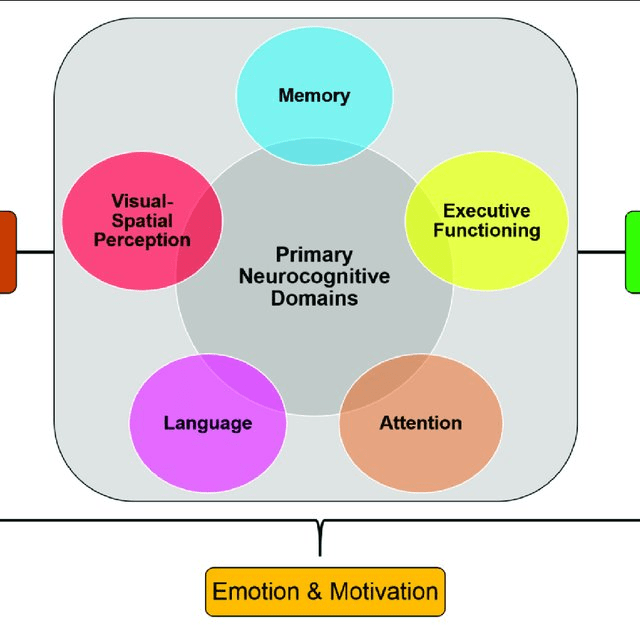
Emotion and Motivation Image Link and Citation: (Dahhan, Noor & De Felice, Fernanda & Munoz, Douglas. (2019). Potentials and Pitfalls of Cross-Translational Models of Cognitive Impairment. Frontiers in Behavioral Neuroscience. 13. 48. 10.3389/fnbeh.2019.00048.
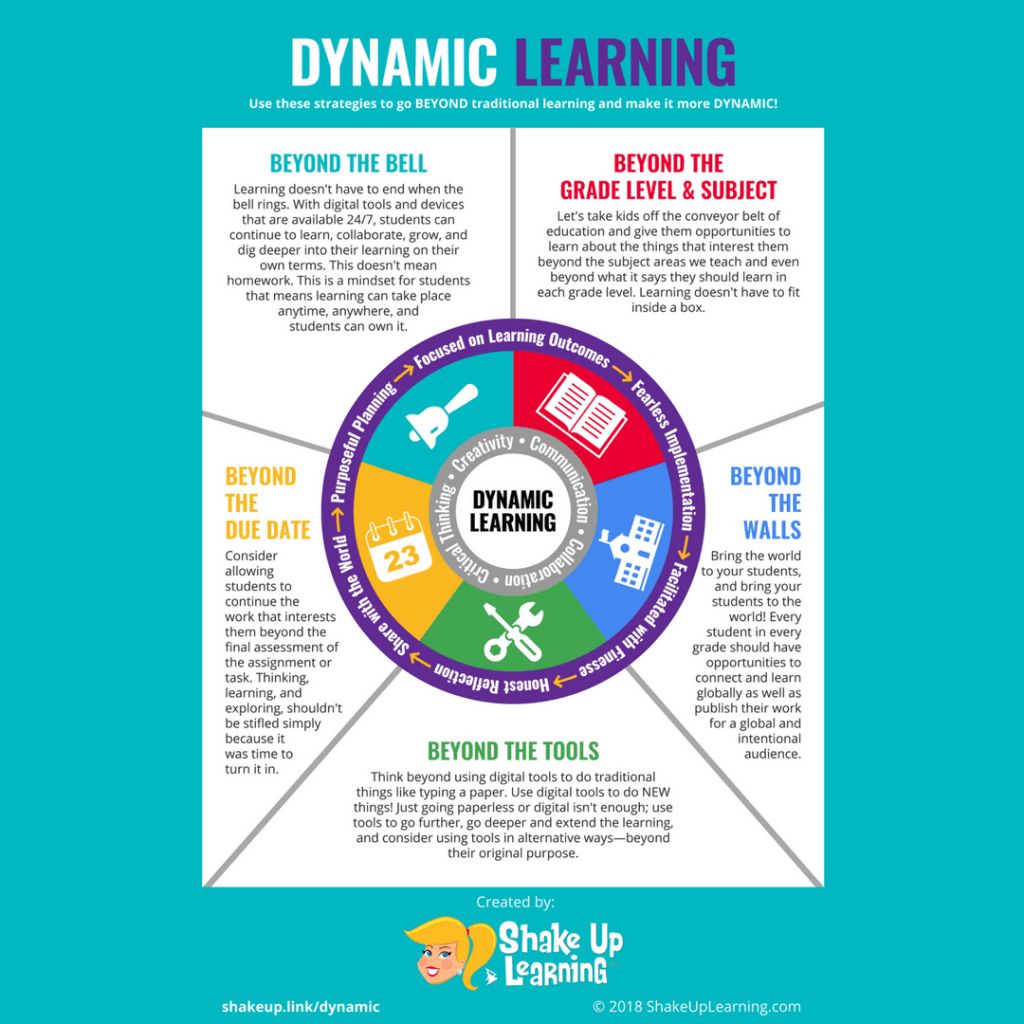
Dynamic Learning Link and Citation: Bell, Kasey. February 26, 2018. How to Push the Boundaries of School with Dynamic Learning. Retrieved from: https://shakeuplearning.com/blog/push-boundaries-school-dynamic-learning/dynamic-learning-2-2/
References:
Coaching for Better Learning. YouTube Video, Cognitive Science: How to Improve Your Teaching. Retrieved from: https://www.youtube.com/watch?v=tMEOpYpaswc&t=3s
Clayton, M. Abraham Maslow and the Hierarchy of Needs – Content Model of Motivation
[YouTube: [YouTube: (72) Abraham Maslow and the Hierarchy of Needs – Content Model of Motivation – YouTube] https://wwwyoutube.com/watch/v=9hdSLiHaJz8&t=43s
Ferlazzo, Larry. (2017). Educator Week: What is ‘Transfer of Learning’ and How does it Help Students? /[Video]. YouTube. https://www.youtube.com/watch?v=N8QfkT8L9l0&t=215s
Forney ISD: YouTube Video, How We Learn. Retrieved from: https://www.youtube.com/watch?v=wlaG99awCD8
Mayer, J. D., Roberts, R.D., & Barsade, S. G. (2008). Human abilities: Emotional intelligence.
Annu. Rev. Psychol., 59, 507-536.
Pessoa, L. (2009). Cognition and emotion. Scholarpedia, 4(1):4567.
Perkins, D. N. (2018). Play the Whole Game. [YouTube: Play the Whole Game: retrieved from: https://www.youtube.com/watch?v=JRQY01Hhrww&t=349s%5D
Perkins, D. N. (2009). Making learning whole: How seven principles of teaching can transform education. Jossey-Bass.
Sabry, K., & Barker, J. (2009). Dynamic interactive learning systems. Innovations in Education & Teaching International, 46(2), 185-197
Thagard, Paul, “Cognitive Science”, The Stanford Encyclopedia of Philosophy (Spring 2019
Edition), Edward N. Zalta (ed.), URL =<https://plato.stanford.edu/archives/spr2019/entries/cognitive-science/>.
Thomas, Andre. (May 10, 2018). TedxTamu: The Effective Use of Game-Based Learning in Education /[Video] YouTube. https://www.youtube.com/watch?v=-X1m7tf9cRQ&t=8s
Vanderbilt University, Center for Teaching. (n.d.). Principles & frameworks. Teaching and Learning Toolbox for Informed Education. (Blog). (2019, March 15). A-Z of Cognitive Science.
Yale, K. The Power of Motivation: Crash Course.
[YouTube: (72) The Power of Motivation: Crash Course Psychology #17 – YouTube] https://wwwyoutube.com/watch?v=9hdSLiHaJz8&t=43s
References (Images)
Bell, Kasey. February 26, 2018. How to Push the Boundaries of School with Dynamic Learning. Retrieved from: https://shakeuplearning.com/blog/push-boundaries-school-dynamic-learning/dynamic-learning-2-2/
Dahhan, Noor & De Felice, Fernanda & Munoz, Douglas. (2019). Potentials and Pitfalls of Cross-Translational Models of Cognitive Impairment. Frontiers in Behavioral Neuroscience. 13. 48. 10.3389/fnbeh.2019.00048.
References (Videos)
[YouTube: The Art of Personal Growth: The 5 Learning Theories -YouTube] (August 22, 2021) https://www.youtube.com/wath?v=sAxAegfVd00
[YouTube: Learning Sciences Theories- Behaviorism, Cognitivism, Constructivism-YouTube] https://youtu.be/2e4GsZFgKQo
[YouTube: Seven Reasons to Pilot Game-Based Learning With Your Students-YouTube] Link: https://youtu.be/zPFJQqsATOk
[YouTube: The Importance of Emotions in Learning Link -YouTube] https://youtu.be/eqSoWurDLio
[YouTube: Intro to Psychology: Crash Course Psychology #1-YouTube]Link: https://youtu.be/vo4pMVb0R6M
[YouTube: How We Make Memories: Crash Course Psychology #13-YouTube] Link: https://youtu.be/bSycdIx-C48
[YouTube: 5 Keys to Social and Emotional Learning Success-YouTube] https://youtu.be/DqNn9qWoO1M
[YouTube: Teaching Strategies- Gaining Children’s Attention-YouTube] https://youtu.be/jbNpDq7ZUDY
[YouTube: Preschoolers – Cognitive-YouTube] https://youtu.be/BKJzl8P3pR4
 Education2022
Leave a comment