by Andrew Parrella
Post University EDU_510 The Cognitive Science of Teaching
Dr. Mary Mills
Metacognition is defined as “thinking about thinking” (Livingston, 2003), therefore has to be looked at to see how it affects whether or not cognition is actually being done about how human beings learn in “…variables…about ow human beings learn and process information, as well as individual knowledge of one’s won learning processes.”
Metacognitive experiences and the involvement of strategies of regulation as stated by (Brown, 1987), are in sequences therefore are defining that a genitive goal has been met. The relevance to learning is a form of explanation and relates to understanding the deeper “how” and “why” in processes and helps the consciousness. This, and cognitive sciences explanation can be enhanced as we as educators become more aware of the strategies to help adjust the thinking and analyzing of the learner appropriately. Skills of knowledge, the educational training programs or modules can be altered to obtain many principles related to our learning and work settings to enhance processes.
Through Perkin’s theory of teaching and learning through using methods of deconstructing and reconstructing (Perkins, 2009), by making learning whole and using the metaphors of the expert himself through steps (7) we gain practical application. By working on the hard parts as in the example of playing the piano and not just practicing correcting mistakes over and over, we can see the contrast to that approach to one of golfers and “bunker” drills (Perkins, 2009) whereby improving sand shots through practice goes towards the understanding of the task only gets better by “restructuring old performance,” (Perkins, 2009). Deconstructing and then reconstructing the hard parts is done in a new and better way. (Perkins, 2009).
The old “take it to heart, keep it in mind, and do better next time” (Perkins, 2009), is a slighting of the hard parts can be a slighting of these hard parts better known as the “hearts-and-minds theory” (Perkins, 2009). This old method mostly used worldwide can be elusive as communication as to what to improve is vague and general. Not enough or proper feedback to inform the “what” needs to improve is the flaw.
Even with newer method such as “error logs,” used in a student of Perkins, William Kendall and an algebra class did not improve performance as constructive information related back to the learner did not help students find where the answers were (Perkins, 2009).
We need to embrace the hard parts and by working to address them, the structural challenges of teaching and learning can be improved (Perkins, 2009). As Ericsson identified so important for learning is to in the “versions of the deliberate practice,” we need to ongoing assessment that is actionable. As Kenna Barger used questions to challenge her bungee jumpers to assess the lengths of elastic and specificity to lead to correct answers, the method of challenging those specifics leads to more learning (Perkins, 2009).
Peer and self-assessment are good and goes beyond just instructor feedback which opens more guidelines about answers (Perkins, 2009). Rubrics can guide an assess but are better when more question or varied viewpoints can assess as well.
Feedback therefore is crucial and can be corrective, conciliatory, or communicative and each has benefits with the most far reaching as in clarification, appreciation, concerns, or suggestions, with deeper platforms for more information exchange (Perkins, 2009).
Anticipating the hard parts and relating this all to cognition, memory, attention, and transfer of learning is through the “how” do we get to point A to B, then the “why” are we doing this which gives meaning and more information of consciousness as the information is retained.
The impact of emotion, attention, motivation, and culture on the application of these cognitive theories in teaching are apparent and as stated in (Marchetti, 2018), “…consciousness is a unique way of processing information, in that: it produces information, rather than purely transmitting it; the information it produces is meaningful for us; the meaning it has is always individuated.” In addition, it is noted that, “Attention originates and is deployed from a single locus inside our body, which represents the center of the self, around which all our conscious experiences are organized (Marchetti, 2018). Attention also is the determining factor of the “conscious experience: Periodicity and phenomenal quality” (Marchetti, 2018). For the information, we learn to be complete, however, we need what Marchetti defines as, “…modes of givenness of conscious experience and the stream of consciousness,” (Marchetti, 2018). This requires a “working memory mechanism,” to assemble all the information by our attention (Marchetti, 2018). Marchetti’s (Marchetti, 2018) references to what theories of consciousness used by cognitive psychologists and their basis on “the mind-as-a-computer metaphor,” is important as it suggests that the module at the end of the chain of behavioral response is therefore “consciousness” (Marchetti, 2018). Better termed the “operating system,” [Johnson-Laird {98}], “central processor [Umilta {209}], or “supervisory system” [Shallice {190}].
These suggestions also limit the conscious experience until we add experience and the “…. continuously modifies the person and the way he processes information….” (Marchetti, 2018). This makes it known that that in theory each person experiences information and the processing of information never the same. Other theories, such as the “Integrated Information Theory of consciousness (IIT),” (Tononi, [202], [204]), and (Tononi and Koch, [205]), introduce properties of consciousness or “axioms” (Marchetti, 2018), and physical properties and a mathematical framework for the properties and operational basis. Specifics of essential properties would include: “intrinsic, composition, information, and integration,” each with specific relations to consciousness and learning.
All these theories including such as IIT which can be defined as “protoconsciousness” or “non-cognitive consciousness, instead of “cognitive-consciousness” (Cerullo [28]), appear to categorize one type of information processing as general – IIT and others as more closely related to cognitive-consciousness that leans towards biological emphasis and perspective as well as evolutionary factors involved.
Since Conscious Experience or CI is objective with many theories that can be disputed, it is another theory that states that, “….human beings are self-organizing systems, that is, systems that are able to configure their own internal structure in response to perturbations from the environment in a manner that is anti-entropic (Marchetti, 2018). The UTI or unified theory of information is one that is more accepted in learning theories however not exclusively. It does support, “…schemas…various kinds of orders….” (Marchetti, 2018).
Lastly, (Marchetti, 2018) cites Luhmannn’s observation of messages that even though observed by one may produce “different information for different people.”
Conscious experiences therefore are relative to the people who are experiencing them and can be varied, especially important in learning. This applies to language, sociology. The involuntary, and voluntary contributions of alterations of experiences we learn therefore are transitory for the conscious experience (Marchetti, 2018). “Invariant dimensions” in the self can also have wide ranging experiences from fluctuations in phenomena and subjectiveness in conscious experiences are noted.
For attention and the ability for us to understand the information, we select, and focus related to us or our “goals” or “saliency” (Marchetti, 2018).
Periodicity, or “succession of discrete states” (Marchetti, 2018), forms our conscious experiences. Neurophysiological investigation is now confirming that, “…a seamless flow of information is actually the result of the combination of assembly of distinct processing epochs, which are produced by a periodic processing whose physiological basis is provided by electrical neural oscillations (Baumgarten et al. [ 15] ; Blais et al. [ 17] ; Busch et al. [ 21] ; Doesburg et al. [54] ; Fingelkurts and Fingelkurts [63] , [65] ; Fingelkurts et al. [69] ; Kranczioch et al. [109] ; Mathewson et al. [138] ; Neuling et al. [159] ; Romei et al. [177] ; Van Dijk et al. [214] ; Varela et al. [220] ; Wutz and Melcher [227] )(Marchetti, 2018).
As the stream of consciousness flows continuously between thoughts, objects and then other new thoughts and objects, we can see that, “Attention alone is not sufficient for the more complex forms of conscious experiences to occur. For sure, attention ensures the selection and shaping of basic pieces of information of conscious experience. However, another mechanism is needed to combine and assemble them. This mechanism is working memory (Marchetti, 2018).
Marchetti’s (Marchetti, 2018) analysis and studies show that the belief that, “…. attentional activity also determines two other most relevant features of conscious experience: periodicity and phenomenal quality”
Finally, to sum up the importance and detailed analysis of attention on periodicity, experience, and processing, we can see the interconnectedness of how teaching for each learner would or could produce different and varied learning outcomes. Measuring the outcomes could be a challenge for educational institutions as the delicate balance of complex factors of conscious learning, including attention, memory, and transfer of information has been studied from many theories being introduced to challenge one another and which are most prominent in that process.
Because humans by nature are unique and complex, it is no doubt that learning is unique and complex. We can see some vastly different focuses on theories that show how the conscious experiences are like a continuous flow of constantly evolving things and the mention of a “flowing river,” (Marchetti, 2018) as an example of this is so prevalent.
The detailed date presented above is an overview of theory. Now, how can we as educators take this to the next level. One way that this can be done is for curriculum designers and educators to learn how to actively apply the lessons of the theory into practice. That would be to by trying to tap into the areas defined in learning that we can have control over. These could include current curriculum changes being implemented through Magnet School Programs which has been done in many towns in Connecticut for example. Since the health crisis of COVID-19, we must include an online option or component to address the home-schooling necessary for addressing the possibility of future a future crisis which we are not aware of yet. We also should be using all forms of media to maximize the learning potential. A perfect example of this could be similar to the movie Sister Act, where singer Delores becomes a sister and has to totally change her music class curriculum to meet the cultural needs of the students who are totally disengaged, unmotivated, and cannot seem to remember, be engaged, or even want to process the music they should learn. A bit of a dramatic representation of a major overhaul of a failing curriculum, but one that I am sure every family or student can relate to.
Other examples of taking learning to another level and is currently used in the Magnet programs in the Groton Public School system is one such as the Marine Science Program which takes students down to the environment of being on the coastline for first-hand sight, hearing, and touch to deepen learning.
These are just a few examples, but whether it be language skills, studying abroad, math skill and seeing how a bridge is built in measurements, or visiting a historical sight, attending a concert to expose students to new music, all can be used to help transfer learning through exposure, processing, forming opinions, and taking learning skills to new levels.
Graphics on Thinking:
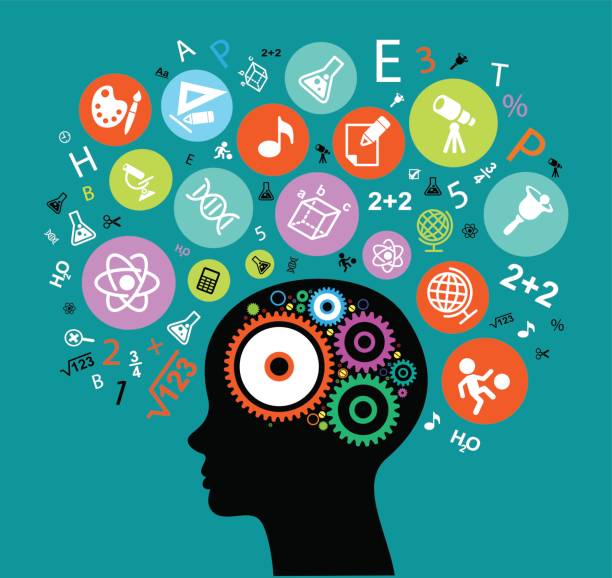

Link to YouTube Video on Memory:
Link to YouTube Video on Metacognition:
Link to YouTube Video on Motivation & Emotion
https://www.youtu.be/t SpWARKH-I
References
D’Agostino, A.(2016). AP Psychology: Motivation & Emotion /[Video] YouTube: https://www.youtu.be/t SpWARKH-I
Livingston, J. (2003). Metacognition an overview. ERIC.
Marchetti, G. (2018). Consciousness: a unique way of processing information. Cognitive Processing, 19(3), 435–464.
Perkins, D. N. (2009). Making learning whole: How seven principles of teaching can transform education. Jossey-Bass.
Peterson’s Test Prep. (April, 2020). Metacognition: The Skill that Promotes Advanced Learning /[Video] YouTube: https://www.youtube.com/watch?v=elZFL4FLVLE
 Education2022
Leave a comment