EDU510
OVERVIEW of LEARNING IN UNITS 1, 2 AND 3 FOR Post University Course EDU510-30_The Cognitive Science of Teaching & Learning_2022_23_Term3
by Andrew Parrella Post University
Dr. Mary Mills
Learning in the first three Units of Post University Course EDU510-30_The Cognitive Science of Teaching & Learning_2022_23_Term3 was an enlightening to say the least. Beginning with understanding Cognitive Science, we learned about the development and enthusiasm that teachers can bring to the learning environment can be enhanced through inviting students to become active learners. This can take place through helping student development more intently by analyzing, evaluating, and problem-solving a wide range of learner outcomes.
The relationship between the many theories of learning, teaching principles and cognitive aspects of mental processes that produce learning is a start. Learning from one theorist (Thagard, 2019), we can apply a view of cognitive science that introduces some basic concepts through history observed. These are introduced as: methods with representations and computation. Approaches, that the terms of: Formal Logic, Rules, Concepts, Analogies, Images, Connectionism, Theoretical Neuroscience, Bayesian, and Deep Learning play individually or collectively, have applications that defined how cognition plays specific influence or a role over student’s learning.
It is theorized that the best way to grasp the complexity of human thinking, “….is to use multiple methods, especially psychological and neurological experiments, and computational models…. Theoretically, the most fertile approach has been to understand the mind in terms of representation and computation (Thagard, 2019).
The Schematic summary of these current theories can give profound knowledge to teachers about how the mind works and a better understanding of why and how people learn in certain ways.
Rules for example make up the mental representations that are similar in the logical predicate. (Thagard, 2019). This helps form behaviors.
Concepts for example are about written and spoken language and matching this with the greater world (Thagard, 2019). The “slots” that people have organized in their brain helps to activate matching, becomes inheritant and translates into a different information gathering then rules (Thagard, 2019).
With Analogies we can understand that processes of retrieval, mapping, adaptation, or analogs then produce behavior that way (Thagard, 2019).
Images are remarkably interesting as the pictures are visual and help with spatial information which can translate to the learner differently then verbal descriptions can (Thagard, 2019). It is the different constructing and manipulating that can develop intelligent behavior (Thagard, 2019).
Connectionism is the network which simulate by methods or aspects which decide, explain, and give language understanding. Activation and learning through a unit to unit can also produce a behavior or connection to another (Thagard, 2019).
The Theoretical neuroscience, or the mathematical and computational theories and models of structures and processes of human and/or animal brains gives the biological influence and introduction and importance of neurons in the “hippocampus and the cortex” (Thagard, 2019), direct blending of mental functioning. The “synaptic connections” (Thagard, 2019), and sensatory importance of the nerves or neurons functioning is extremely relevant.
For the theories of Bayes,’ we get the hypothesis the how of the mind conducting functions, statistical correlations, and conditional probabilities (Thagard, 2019). Because applying probability computations to statistical representations is a mental task, this is important for learning.
Deep Learning and the introduction of AI and game playing and the ability of learning by building on the ideas of connectionism and neuroscience and the study of neurons and their influence on success of the brain for action and even layered networks (Thagard, 2019), are relevant as they involve “imagery, emotion, and analogy” (Thagard, 2019).
For overview purposes, the intricate definitions of Cognitive Science and influence over learning is important as each is different yet very interconnected in application.
As stated by (Thagard, 2019),” …cognitive science can be taken as an object of investigation in the philosophy of science, generating reflections on the methodology and presuppositions of the enterprise.”
In the Video How We Learn, (Forney ISD: YouTube), the connection of traditional learning methods to modern day learning methods is described and we learn that by “hijacking brains,” (Forney ISD: YouTube), we can disassemble our past methods and focus on tapping into our short-term and long-term memory with environments that are pain free and safe while creating a risk-free learning zone or environment. This is an important theme and basic principle of learning reflection that can only enhance the learning for students and one that is stressed in our Post University classes first of three Units.
Developing further use of learning a focus on the incorporating of the use of logic, rules and concepts and images in teaching is necessary. Why, because it is these three where we can see that even though there is crossover in all the learning theories, these three are readily used in many environments in teaching. Logic is about, “…. the nature of all the representations and computations that explain how the mind works” (Thagard, 2019).
Rules being the second part of our learning about cognitive science and is important rules they are systematic and create procedures that people must follow making mental formation and creating behaviors.
Concepts or the written and spoken lingual mental representation is critical for learners to map out the similarities and/or differences of bundled features of schema (Thagard, 2019).
As the focus of learning narrows in with theories, Images help learners to inspect, find, zoom in, turn around or rotate, transform, and construct computational procedures (Thagard, 2019).
After the definitions of the theories of learning, much data on game-based learning was introduced in our next Unit 3. The incorporation of this data helped to instill the mental representations commented on previously by helping Rules, Concepts, and Images especially by strategies through Explicit Teaching, Group Learning, Reflection, Analogies (Ferlazzo, 2017), which helped us to discover that the transfer of learning by using games for example helps to enhance that learning through individualizing the student or learner’s different unique learning skills whether that be rate, specified method or skill.
We learned through YouTube Video (Thomas, 2018), that games are breaking the mold in learning and are changing the format for teaching. The example used of Texas A&M University of games in Art History, with a “twenty-seven percent,” (Thomas, 2018), improvement in learning as well as other uses of games are proving that this is becoming more accepted in the curriculum of educational institutions. As game playing’s goals are 100%, students become motivated to strive harder to obtain that percent. (Thomas, 2018).
Mastery in education is a key term and the concept of “rewinding a plan of action” or planning for a “window seat,” that is used in (Thomas, 2018), is useful as we see we can change our methods of learning at anytime and regroup the process to get to the goal of the window seat.
REFLECTIONS ON THE PROCESS OF CONITIVE SCIENCE AND LEARNING ENVIRONMENTS AND CURRICULUM
As I learn increasingly about the science behind the process of learning, I am amazed at current trends in education and the recent focus on Games being introduced in our modern educational systems is slow but steady. It appears to me, that as we move forward in the complexity and design of education that some basic concepts were forgotten. That is the power of play. Remembering years ago, after taking an Educational Psychology course and its rigorous emphasis on theories, etc., the one thing that stuck out in my mind that I truly remember was this.
Play is the highest form of learning. One of the first to formally highlight the educational benefits of play was Fredrick Frobel in the 1890s (Drew, 2022). His toy which was titled, ‘Froebel’s gifts,’ were said to help the cognitive development of children. The challenges would build on the last one and required a new exercise for new strategy.
Maria Montessori (1910’s) approached play in early childhood education my a “hands-off” approach and the teacher was an observer (Drew, 2022).
In contrast, another approach by Reggio Emilia in the (1950-1970s) which was founded by Loris Malaguzzi sought out value in play. Believing the teacher should play with the child, or “co-learning” (Drew, 2022).
A third example of play is The Forest Schools Approach (1990s) in Scandinavia which outdoor play and risk taking encouraged to challenge and help with self-reliance in an unstructured environment (Drew, 2022).
These approaches to learning can intensify positive outcomes and personally, I would encourage their use and expansion in the curriculum of towns and cities.
In my home community of Groton, Connecticut, Magnet Schools have been implemented and encourage many facets of individual learning geared towards a child’s particular strengths from the STEAM Magnet School, Discovery Magnet School – Creativity and Curiosity, Active Exploration Magnet School – Play and Ingenuity- Arts Magnet School and Environmental and Marine Science Magnet School. (Grotonschools.org)
I am excited that our local school system implemented these historic changes and with the challenges of COVID-19 and home schooling, the continued program curriculum is ongoing.
Applying these connections to the reflection of “how would this affect my teaching,” for example, I would suggest that I have used games in the classroom many times, usually with word meaning or use development and math as well to enhance thinking in the calculation sense. It has been highly effective and using teams in an elementary school setting was successful when covering as a substitute several years ago.
I had to totally engage a fourth-grade class in learning words and the only way they would respond was to totally change the former learning reading out of a book method. By using a spelling bee team format, we had teams compete with expectations of success with basic rules of an error of margin with rewards of longer recess for example.
The students really learned the lessons well that day and the hours of reading about how to use a word seemed to flow more quickly when standing up in from of others. The environment was non-invasive, non-threatening and even if an answer was wrong, there was no punishment. Another words, this was a safe environment.
I believe in this case, the actual demonstration to the class students, the enthusiasm, the excitement, and the fact that the children were learning in a game format was inspiring to a very structured curriculum and by bringing something new to the table, there was no denial that the controlled language application in a new format worked. Administration wanted me to be always the main substitute after observing my teaching method.
All this technical data and application made again realize how effective bringing games into the learning process works. My thoughts were about the game show Jeopardy! Yes, remember how you saw the contestants pick a subject and then had to choose an amount to try to win that section of the game and hence highest amount of money. That game made me think how effective game challenges could be and were – not just for children but for adults as well. I remember my grandmother recalling memories from these shows and it kept her mind sharp and intact. It was also a living history learning moment for me, and many facts were incorporated through the social interacting and at that time TV technology.
To implement these ideas, educators can be as creative as need be and apply to many situations.
The question arises: What ideas do others reading have for a learning environment that supports what our theorists in education have been saying for years? Why has it taken so long for our educational system and curriculum to catch up? And lastly, why is the risk taking that has taken place in last centuries taken another whole century to for us to have to take risks now from a mediocre system?
Here are some interesting games we can apply to curriculum or individual learning:
Language Arts Games for Learning:
Vocabulary Spelling City https://youtu.be/xLdqNaPgdJk
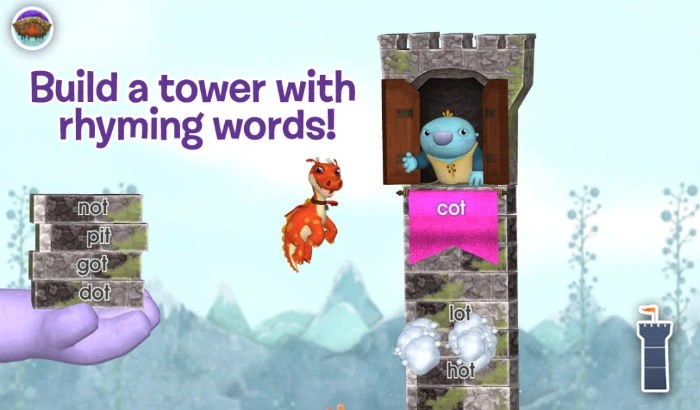
Wallykazam! Letter and Word Magic
Learning Games for Kids: Health

How Prodigy English Works link:
References
Drew, C., October 23, 2022. Play Based Learning- Benefits And Challenges.
HelpfulProfessor.com. https://helpfulprofessor.com
Groton Public Schools. Groton Public Schools K-5 Magnet Elementary Schools. Retrieved from: https://Grotonschools.org
Prodigygame.com retrieved from: https://www.prodigygame.com/main-en/english
Thagard, P. (Spring, 2019, Edition). Cognitive science. In Edward N. Zalta (ed.). The Stanford Encyclopedia of Philosophy.
Thomas, Andre. (May 10, 2018). TedxTamu: The Effective Use of Game-Based Learning in Education /[Video] YouTube. https://www.youtube.com/watch?v=-X1m7tf9cRQ&t=8s
 Education2022

Leave a comment